
Blog

bring back sportsmanship

We need to bring sportsmanship and discipline back

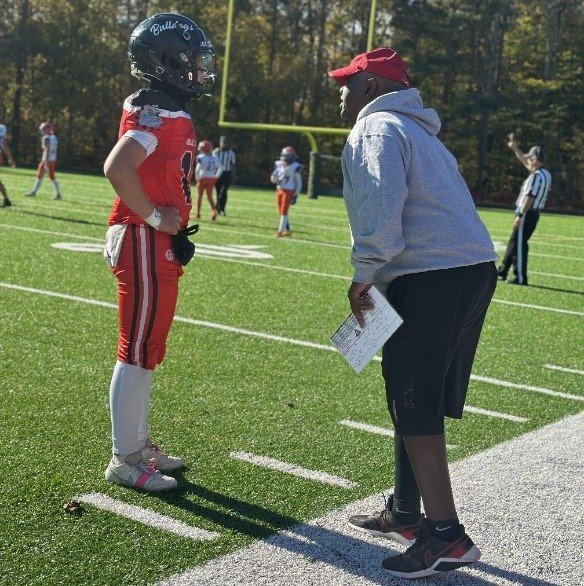
I am a middle school head coach, and I have been scrolling through social media for months, looking at sports-related posts.My conclusion is that there is an urgent need to bring sportsmanship and discipline back. Let me share my thoughts on three things: sportsmanship, discipline, and kindness.I believe as everyone does that athletes have the right to celebrate. But celebrations should not come at the expense of another person or your team. There is no need to antagonize your opponent after the game. The final score does that. It is important to make sure that our celebrations reflect well on our team, our school, our community, and our family.Discipline is the ability to manage your emotions and actions. For instance, years ago, I watched with dismay an ejected player attacking the game official. He obviously ignored that fact that his ejection was a consequence of his actions on the field. But that is only one example. I see parents attacking coaches, referees, and each other. I hear coaches and players using inappropriate language.Everyone must remember that there are consequences for our actions. Too many times, we get emotional and we act and then think. Discipline helps us think about our actions before carrying them out, weighing whether what we intend to do is right or wrong.The sports world also needs kindness. We see plenty of it: a player gives her jersey to a fan, a player gives the ball to a fan, athletes sign autographs, and athletes visit those less fortunate than themselves. If we are kind, the images I mention replace the inappropriate images and actions.Coaches must establish a great, competitive atmosphere. They should stress competing with commitment, losing with honor, and winning with dignity. Coaches should always consider the environment they are creating because the team is always watching!Athletes, at least initially, try to mimic the behavior and the culture of the coaching staff. If they see professional, appropriate behavior, they follow those actions. Similarly, if they see overly aggressive outward behavior, they follow those actions. This is their coping mechanism, especially if they have not formed their own sense of commitment, sportsmanship, and discipline.Several years ago, I was coaching at a high school and I watched an opposing coach berating the official for several minutes, and then one of his players started berating the official. I assure you; I am not perfect. For instance, I remember coaching a recreation league game many years ago and I thought the calls were horrible. I started to throw my hat on the field in anger, but one of my players caught my eye. He was WATCHING. He stared straight into my eyes. Fortunately, I did not throw the hat, and I swallowed whatever words I was going to say. It helped me to keep my wits about me.I keep that lesson with me every day. Sometimes coaches want a penalty to possibly get their team going, but even that can be done with style and respect. Many coaches in many sports at many levels do this, but the good ones know how to do it without disrespecting the official or the game. When I need an “energy” penalty for my team, I just walk too far out on the field during play and do not step back when told to do so. I get the penalty, I say it is not fair, and the players get new energy.I am grounded by my 3D Philosophy: DEDICATION, DETAIL, and DISCIPLINE.• Ded·i·ca·tion /dedəˈkāSH(ə)n/. Noun: the quality of being dedicated or committed to a task or purpose.• De·tail /dəˈtāl,ˈdētāl/. Noun: an individual feature, fact, or item.• Dis·ci·pline /ˈdisəplən/. Noun: to train or develop by instruction and exercise, especially in self-control.Simply, we must be DEDICATED to the task at hand, we must pay attention to the DETAIL of what we see and what we are taught, and we must have DISCIPLINE in all things: Family, Faith, School, Community, Work, and Sports.

We need to bring sportsmanship and discipline back Read More »

1 2 (1)

Right Fit Leading: Great Leadership in Action

The other day I went to lunch and was captivated to see great leadership in action. I was at a Chik-Fil-A and I watched the managers and the team members work seamlessly in support of every customer. The managers were active, alert, and involved. The team members were enthusiastic and shared information freely with managers and with other members. This team was impressive! If you need help building your team, here are a couple of discounted book suggestions for you. Right Fit Leading: Emotionally Intelligent Team Building 3D COACHING: Suggestions for a New Approach

Right Fit Leading: Great Leadership in Action Read More »

whole logo jpeg

Sharing My 3D Philosophy

My 3D philosophy is dedicated to all the motivated girls and boys I had the pleasure to coach over the years. It was shaped with the help of all those Air Force people with whom I shared the sacrifice of serving the nation. I hope it helps you. Dedication requires that you commit to the task at hand and to your responsibility. Pay attention to the Detail in the teaching and training we receive. Use Discipline to always follow the rules in all situations. READ MORE

Sharing My 3D Philosophy Read More »

RFL: Keys to Networking

I just read a post about declining bad LinkedIn connections, and it reminds me of ways to conduct effective networking. The post I read was correct in suggesting that you should read the profile of your intended connection and try to understand whether they might be interested in your connection request or message. Additionally, it is good to see if you have mutual connections with the person on LinkedIn or in other ways. Performing this check allows you to use your current network to see if there might be a fit. Even if you get the connection, the work is not done. You must work on being a good connection. I have some simple guidelines for my networking activity and for what I expect from others. Check in from time to time to say hello and refresh the connection. Any time you check in, state your purpose up front: pitch, offer, refresh the connection, whatever. If the person is not interested, go away. For everyone, if the connection is not rewarding in some way, disconnect. Remember, we can always delete! In terms of my list, if those I connect are not satisfying these rules, I can delete or disconnect or unfollow. And if I am not following the rules of others, they should abandon me. Make networking work for you by ensuring that it gives you value and shared understanding.

RFL: Keys to Networking Read More »

38

The RFL Process: Achieve Shared Understanding

Teaching emotional intelligence and leadership skills should be a two-way exchange of ideas and theories to achieve shared understanding. An example is my second presentation at the University of Connecticut at Hartford in June. This presentation continues my focus on The Right Fit Leading Process and win-win outcomes. Using The RFL Process is valuable because educators, and leaders, should value relationships that create and nurture shared understanding. The RFL Process provides a method to handle leader and team development in any situation through sound principles of philosophy, inspiration, and motivation. Emotional Intelligence (EI) is important in all these activities. Leaders and teams must work together to handle interpersonal or work relationships with fairness and good judgment. My sessions also touch on empathy, team cohesion, and situational leadership including Leader Member Exchange (LMX) Theory. Focusing on these constructs creates participative discussions in sessions that allow me to delve into case studies and real-life situations with equal enthusiasm. Please let me know if you want my help with this kind of training and development.

The RFL Process: Achieve Shared Understanding Read More »

35542 1 1

Executive Leadership Session

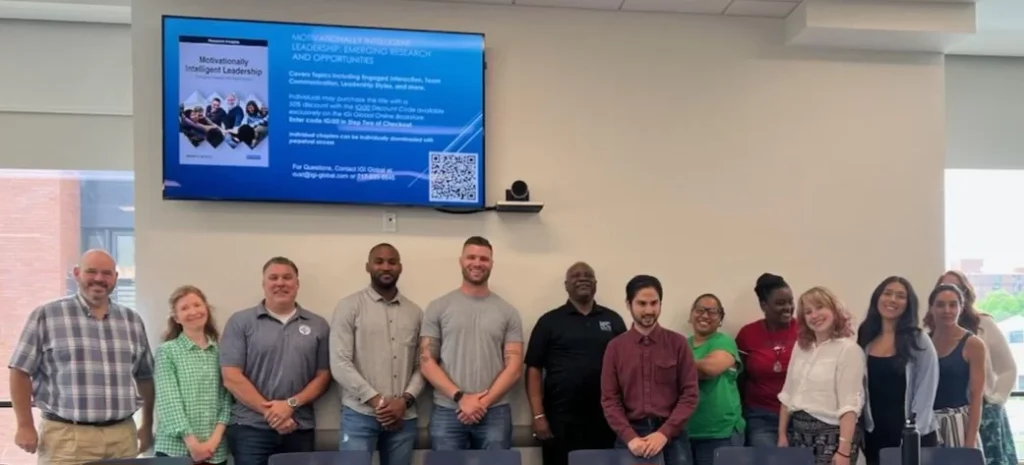
I enjoyed today\’s great session with the energetic students at the University of Connecticut at Hartford\’s Executive Leadership Course. During our session, we discussed The Right Fit Leading Process, building emotionally-intelligent teams, creating relationships, and achieving shared understanding. We then progressed to analyzing case studies to closely examine trust in terms of how it is developed and nurtured. I want to thank Dr. Mohamad Alkadry, director of the UCONN School of Public Policy, for this opportunity to engage.

Executive Leadership Session Read More »

developing ei

RFL: Good Emotional Intelligence Achieves Win-Win Situations

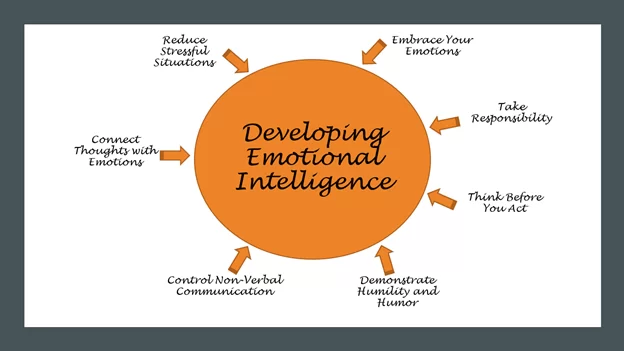
Being good at Emotional Intelligence (EI) can help you achieve win-win situations. For me, the bottom line of EI is to understand your emotions, and the way you do things based on those emotions, and to understand the emotions of people around you and the way they do things based on those emotions. Then you try to find a balance, a collaboration, or a win-win situation. Once you start to understand those emotions, you can think about them and take some action. After a recent speech in Chicago, Illinois, someone asked me why I am so fond of EI. My answer was that EI forces me to assess myself in relation to those around me. It drives me to seek balance or to create collaboration. Once you start to understand those emotions, you can think about them and take some action. Leading or following using EI principles means that you accept the need to engage, to communicate, and to pursue shared understanding. EI can be really simple if you can understand yourself and how you react. It can help you if you understand others with whom you interact, and then examine how they react to their emotions. Then you can try to find a middle ground. It might not be middle ground; it might be 60-40 in someone’s favor to get it to work. But you must remember that the only way that you’re going to understand their emotions and the way they react is to engage.   Note: RFL is Right Fit Leading, our approach to the leader and member development journey.

RFL: Good Emotional Intelligence Achieves Win-Win Situations Read More »

personal 1264695 1920

Improving Your emotional Intelligence

I had a great day today presenting Improving Your Emotional Intelligence: Creating a Win-Win Collaborative Culture. I gave the speech to a client conference in Chicago with more than 100 attendees. What was the highlight of my interactive presentation? The importance of remembering that a win-win collaborative culture leads to shared understanding. There are many things you can talk about when building or improving your culture. You can discuss emotional intelligence, empathy, engagement, organizational development, or even about training. My main point is that the win-win and shared understanding aspects are what make my presentation a little different than others.

Improving Your emotional Intelligence Read More »

a3 poster 1296448 340 e1504527875599

RFL: Collaborative Leadership

Collaborative leadership is a non-traditional way to address organizational development. By training leaders and those they lead together, this approach allows skill development in philosophy, inspiration, and motivation. This approach focuses on collaborative ways to create effective relationships and effective teams. Using emotional intelligence (EI) and empathy, leaders get in touch with those they lead. They look to master their own emotions and those of others. This approach relies on effective engagement, and it fosters the pursuit of win-win situations that create shared understanding. In addition, organizational relationships improve as trust develops, and as cultural developments are observed. NOTE: The Right Fit Leading (RFL) Process addresses the need to change the focus of training from the traditional leader-centric philosophy to one of engagement, interaction, and collaboration. This creates an atmosphere where leaders and those they lead have equal opportunities to affect the leader-follower relationship that is required in effective teams. The RFL Process promotes the creation of effective teams because it is based on emotional intelligence and empathy for all members, regardless of their position or level of responsibility. The RFL Process addresses a consistent philosophy of how we lead and follow. It suggests that we must inspire ourselves and others. It also demonstrates the need to motivate ourselves and others to take on challenges that we might not attempt otherwise. We use emotional intelligence (EI) and empathy, engagement, LMX Theory, and knowledge about the meaning of trust and how it is developed and nurtured. At this point, development can turn its focus to what is needed for each leader and member. We use the principle of engaged interaction to help leader and team development subjects arrive at a shared understanding.

RFL: Collaborative Leadership Read More »

0