COVID

analyzing telework book e1666299180827

Right Fit Leading: Telework Benefits

Companies are trying to determine what “back to work” should look like, and workers are trying to take advantage of the positive work life changes they found in COVID-19. As the workplace changes, we must pay attention to trustworthiness and performance as they relate to telework. Trustworthiness is the quality of a person that inspires reliability. When it exists, behaviors like being respectful, honest, consistent, positive, and selfless will be evident. Managers who follow telework policies developed in response to COVID-19, or developed for other reasons, are building trust. Trust can then grow as emotions are shared and real issues are addressed professionally. View Dr. Brown’s video here.

Right Fit Leading: Telework Benefits Read More »
telework article art

New Journal Article on Telework, Trust, Performance

Thanks to IGI Global for publishing the paper \”Examining the Influence of COVID-19 on Telework, Trustworthiness, and Performance\” that I wrote with David Miller. I appreciate the continued support of my research and writing!  https://www.igi-global.com/article/examining-the-influence-of-covid-19-on-telework-trustworthiness-and-performance/297086

New Journal Article on Telework, Trust, Performance Read More »

ijarphmwebp

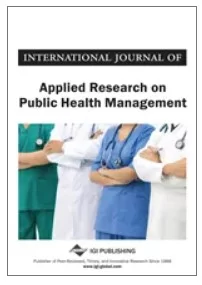
New Article: COVID-19 Survey on Face Mask Wearing

An article that Leslie Krohn and I wrote last year has been published. ABSTRACT: As the nation battles COVID-19, we analyze the policy and tactics required to follow the recommendations of scientists and health professionals to achieve physical and psychological well-being by wearing masks to slow the spread of the SARS-CoV-2. An online survey from a business-focused social media network is employed to understand the issues for and against mask wearing. The survey findings showed that 60% of organizations have created some kind of health pact, pledge, or commitment and that most plans identified impact everyone who interacts with a business, not just employees. The findings do not shed much light on what drives people to opt out of mask wearing. The practical findings are that there is a need for achieving, understanding, and subsequent buy in of mask wearing that would be helped with a solid plan. The limitations of the research are primarily the small size of the convenience sample and the fact that the population may be restricted. Replication of this type of study with a formal, qualitative approach aimed at populations of interest is highly recommended.

New Article: COVID-19 Survey on Face Mask Wearing Read More »

3 small

Right Fit Leading: COVID and Telework, Conclusion

In Part 5, information about leadership development showed ways to determine and/or strengthening leadership style. A trusting connection with clear roles and responsibilities can assist with maintaining a quality work environment. My research addresses understanding of and solutions to teleworking, trustworthiness, and performance issues. Overall, it suggests using a strategic approach that encourages participation and that is required to achieve, understand, and build buy-in for teleworking. I recommend an organizationally sanctioned program that uses leader-manager exchange (LMX) theory to address the factors that contribute to motivating the target audience, the employee. A culture of self-motivation is necessary to empower employees, but there must also be a culture of enforcement when needed. Finally, buy-in at all levels of the organization is crucial to the success of any telework program. My work is focused on refining a strategic approach using important elements: how the organization develops its leaders, motivates employees, and increases productivity; how organizations use EI principles, managing radical change, and learning from available research. These factors can be used to deliver outstanding results. NOTES: I offer this series to help leaders and members reinforce what we know, discover what we do not know, and identify what we should ask questions about. The results are intended to assist everyone to deal with positive and negative aspects of telework. This is part of my educational journey that I hope has provided you with some valuable information.

Right Fit Leading: COVID and Telework, Conclusion Read More »

3 small

Right Fit Leading: COVID and Telework, Part 3

In Part 2, the discussion focused on using best practices in standards and team building and following LMX theory. This relationship-based approach is useful because collaborative interactions and adjustments to new or distributed operations are happening in the workplace every day. Companies are trying to determine what “back to work” should look like, and workers are trying to take advantage of the positive work life changes they found in COVID. As the workplace changes, it is important to pay attention to trustworthiness and performance as they relate to telework. Trustworthiness is the quality of a person, or a thing, that inspires reliability. When it exists, behaviors like being respectful, honest, consistent, positive, and selfless will be evident. Success will require managers who can admit mistakes, acknowledge weakness, applaud strength, and help each other, and who can promote those qualities in employees. This will build mutual trust, which is important because everyone has a lot at stake based on risks inherent in trusting another person. Those risks are about putting one’s faith or a pending decision in the hands of someone in whom you have not yet developed confidence, or in whom there are limits to that confidence. Managers who follow telework policies developed in response to COVID-19 are building trust. Trust can then grow as emotions are shared and real issues are addressed professionally. NOTES: I offer this series to help leaders and members reinforce what we know, discover what we do not know, and identify what we should ask questions about. The results are intended to assist everyone to deal with positive and negative aspects of telework. This series is my educational journey that I hope is valuable to you.

Right Fit Leading: COVID and Telework, Part 3 Read More »

3 small

Right Fit Leading: COVID and Telework, Part 2

In Part 1, I examined how COVID dramatically changed our world in terms of telework specifically and remote life in general. In this exploration I want to share some of my research to date. I must thank my current colleagues for their discovery efforts and conversations regarding these issues. When we examine teleworking, we find that important relationships must be created and/or nurtured to bring success to organizations that use this technique. There are best practices to be learned in terms of communication, flexibility, standards, and team building. Communication best practices include managing both face-to-face and online situations, while flexibility best practices help in achieving work-life balance. Best practices in standards and team building relate in part to collaborative relationships and adjustments to new or distributed operations. The best practices must be driven by a set of rules for operating that should be driven by shared understanding between leaders and members. I use those terms instead of employee and supervisor because I am basing this approach on the theory of leader-member exchange (LMX). LMX is a relationship-based approach for managing teams. It drives leader effectiveness through developing dyadic (two-way) relationships with members. I believe the discussion is important, as some organizations have made the decision to greatly reduce or to abandon telework. In fact, we see stories everywhere about workers who would rather resign that come back to the office. These are issues organizations must deal with in one way or another. NOTES: I offer this series to help leaders and members reinforce what we know, discover what we do not know, and identify what we should ask questions about. The results are intended to assist everyone to deal with positive and negative aspects of telework. This series is my educational journey that I hope is valuable to you.

Right Fit Leading: COVID and Telework, Part 2 Read More »

3 small

Right Fit Leading: COVID and Telework, Part 1

We all realize that COVID dramatically changed our world in terms of telework specifically and remote life in general. We are still learning new things about balancing family and work, trustworthiness, performance, and accountability issues, important changes and discoveries about the way the world goes to work, and discussions of the dynamic ways people communicate. Along with several colleagues, much of my research has turned to examinations of the reasons for resistance to telework to shed light on how COVID has changed us. So far, information from qualitative interviews concerning telework, an evaluation of employee engagement now and in the future, and ideas and actions that should prove helpful to organizations are at the heart of the discovery. A variety of issues or concerns are evident, including distractions, fatigue, accountability, communication, productivity, technology, coping, work hours, resources, and telework plans or the lack thereof. The analyses I speak of are intended to help leaders to reinforce what we know, discover what we do not know, and identify what we should ask questions about. We can use these results to assist us in working through positive and negative aspects of telework. This is the first in a series, but I don’t know how many parts there will be. I am simply looking forward to the educational journey.

Right Fit Leading: COVID and Telework, Part 1 Read More »

0