
Public Relations

bring back sportsmanship

We need to bring sportsmanship and discipline back

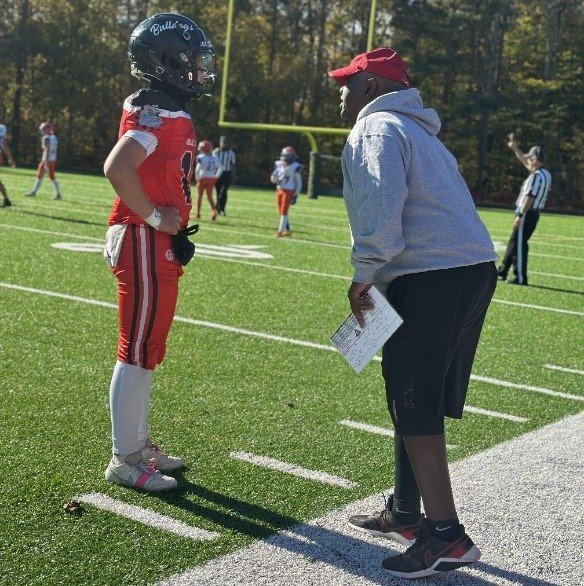
I am a middle school head coach, and I have been scrolling through social media for months, looking at sports-related posts.My conclusion is that there is an urgent need to bring sportsmanship and discipline back. Let me share my thoughts on three things: sportsmanship, discipline, and kindness.I believe as everyone does that athletes have the right to celebrate. But celebrations should not come at the expense of another person or your team. There is no need to antagonize your opponent after the game. The final score does that. It is important to make sure that our celebrations reflect well on our team, our school, our community, and our family.Discipline is the ability to manage your emotions and actions. For instance, years ago, I watched with dismay an ejected player attacking the game official. He obviously ignored that fact that his ejection was a consequence of his actions on the field. But that is only one example. I see parents attacking coaches, referees, and each other. I hear coaches and players using inappropriate language.Everyone must remember that there are consequences for our actions. Too many times, we get emotional and we act and then think. Discipline helps us think about our actions before carrying them out, weighing whether what we intend to do is right or wrong.The sports world also needs kindness. We see plenty of it: a player gives her jersey to a fan, a player gives the ball to a fan, athletes sign autographs, and athletes visit those less fortunate than themselves. If we are kind, the images I mention replace the inappropriate images and actions.Coaches must establish a great, competitive atmosphere. They should stress competing with commitment, losing with honor, and winning with dignity. Coaches should always consider the environment they are creating because the team is always watching!Athletes, at least initially, try to mimic the behavior and the culture of the coaching staff. If they see professional, appropriate behavior, they follow those actions. Similarly, if they see overly aggressive outward behavior, they follow those actions. This is their coping mechanism, especially if they have not formed their own sense of commitment, sportsmanship, and discipline.Several years ago, I was coaching at a high school and I watched an opposing coach berating the official for several minutes, and then one of his players started berating the official. I assure you; I am not perfect. For instance, I remember coaching a recreation league game many years ago and I thought the calls were horrible. I started to throw my hat on the field in anger, but one of my players caught my eye. He was WATCHING. He stared straight into my eyes. Fortunately, I did not throw the hat, and I swallowed whatever words I was going to say. It helped me to keep my wits about me.I keep that lesson with me every day. Sometimes coaches want a penalty to possibly get their team going, but even that can be done with style and respect. Many coaches in many sports at many levels do this, but the good ones know how to do it without disrespecting the official or the game. When I need an “energy” penalty for my team, I just walk too far out on the field during play and do not step back when told to do so. I get the penalty, I say it is not fair, and the players get new energy.I am grounded by my 3D Philosophy: DEDICATION, DETAIL, and DISCIPLINE.• Ded·i·ca·tion /dedəˈkāSH(ə)n/. Noun: the quality of being dedicated or committed to a task or purpose.• De·tail /dəˈtāl,ˈdētāl/. Noun: an individual feature, fact, or item.• Dis·ci·pline /ˈdisəplən/. Noun: to train or develop by instruction and exercise, especially in self-control.Simply, we must be DEDICATED to the task at hand, we must pay attention to the DETAIL of what we see and what we are taught, and we must have DISCIPLINE in all things: Family, Faith, School, Community, Work, and Sports.

We need to bring sportsmanship and discipline back Read More »

maximizing social networking

Maximizing Social Networking for Organizational Performance: Right Fit Leading

COURSE II: Leadership Solutions in a Hybrid Workplace Leadership thrives on a win-win collaborative culture that creates shared understanding. My book Right Fit Leading: Emotionally Intelligent Team Building teaches a process that maximizes training and, in turn, social networking. What sets the book apart from other approaches is its focus on building that shared understanding as the foundation for trust, accountability, and responsiveness. In today’s communication landscape, even organizations working with cleantech communications firms in Arlington VA and renewable energy PR specialists rely on these principles to strengthen internal alignment. The process emphasizes that effective leadership is about finding the right approach for the situation, the team, and the environment. By flexing style with adaptability, reflection, and trust, leaders build credibility and resilience across diverse contexts. Today’s leaders deal with hybrid work situations, a new paradigm where leaders succeed by combining flexibility, equity, and strong relationships across diverse work settings. These leaders blend flexibility, equity, and strong relationships to help teams thrive across diverse settings. This same adaptability is essential for teams supported by climate-tech media relations agencies, energy transition public affairs agencies, and other communication-driven sectors that must balance organizational goals with individual needs to build resilient and collaborative success. Organizations need collective agreements that guide teams. These agreements foster shared understanding, collaboration, and innovation. Those who build these agreements are creating a foundation for effective teams. It is important to develop adaptable approaches to leadership for diverse organizational needs. Leaders must also identify and refine a personal leadership style through self-assessment, an emotional intelligence principle. Assess your emotions and the emotions of others in search of accountability and responsiveness to worker needs and organizational goals. This is true whether leading traditional business teams or those within sustainability communications consultancies in the USA or corporate communications units in the clean energy sector. The Right Fit Leading Process is a practical, emotionally intelligent framework that develops leaders and teams together, moving beyond the outdated view of leadership as a one-person exercise. It avoids the traditional approach of training the leader and team members separately. In this approach, leaders and team members should return to their team and share what they have learned. However, this does not always happen. It may be too busy to go over this information, the leader may not find the time to debrief, or the team members do not have a venue to share their thoughts. This is no one’s fault, but it represents lost opportunities to share data—something that organizations in fast-paced fields, including companies guided by cleantech thought leadership agencies, cannot afford. The Right Fit Leading Process trains the whole team together. During the training, work to develop, discuss, and refine shared understanding. Participants can even find win-win situations through collaboration during the training. This kind of training delivers principle-driven, emotionally intelligent leadership that strengthens leaders and teams. The process is based on 3D: Dedication, Detail, and Discipline. This approach fosters trust, communication, and accountability. It also aligns personal and organizational goals through coaching, mentoring, and real-world responsiveness. Dedication requires that you commit to the task at hand and to your responsibility. Pay attention to the Detail in the teaching and training we receive. Use Discipline to always follow the rules in all situations. Trust is a Gift Leaders and teams rely on trust. Leadership development for teams must start with an understanding of trust. Trust is a gift that someone gives you. Trust grows from effective relationships characterized by role definition, shared understanding, and emotional intelligence. Once team roles and responsibility are defined, ensure that you train people for various roles based on current and future needs and plans. Leaders are responsible for training and preparation of their team for the changing nature of the world of work. Leaders should ensure that they conduct collaborative operations and training. Teams can reap the benefits of setting their goals to motivate high-level achievements. A focus on need satisfaction and on creating positive energy is good for personal and team motivation. When we take care of people and there is shared understanding, we should get other benefits from the team dynamic, like exhibiting ethical and moral behavior and connecting with people in meaningful relationships. A collaborative environment with open lines of communication and valuable feedback builds trust that makes a team more effective. The team may be more productive based on shared understanding. The discussion of intelligence, emotional and/or motivational, is about each person working to understand their own emotions, the emotions of others, and about trying to adjust based on the interplay of each. In this way, we can identify and employ the value that is available to all parties to an interaction and come out of it with total buy-in. Engaged interaction means that we must listen, hear, and understand in full-range communications based on a mutual agreement to continue communicating until you get it right. Now the team can grow with fair-minded, motivated participants who listen to ideas, not just words. Right Fit Communications LLC provides courses that can help leaders grasp EI and empathetic concepts. Check out our store. Check out these emotional intelligence examples:https://www.mastersinminds.com/case-study.-leaders-with-high-emotional-intelligence—blog-1https://www.rochemartin.com/resources/case-studieshttps://digitalcommons.lindenwood.edu/cgi/viewcontent.cgi?article=1365&context=dissertations

Maximizing Social Networking for Organizational Performance: Right Fit Leading Read More »

virginia public relations firm richmond public relations agency

Public Relations in the Digital Age: How to Build a Strong Reputation Online

You have a reputation in the digital age whether you realize it or not. You can let others define you, or you can take control of your online reputation — a philosophy shared by many modern firms, from a crisis communications consultant Virginia businesses rely on to a content marketing and PR agency Richmond companies trust. I call this your voice. It is important that you use your voice to share your views and motivations. You must decide what is best for your situation — but do not let anyone suppress your voice. You may be helping someone else find theirs. Someone may lack confidence to create or share content, or they may find motivation in the way you tell your story. You never know who you might influence. Influencing, monitoring, and maintaining public perception is known as online reputation management (ORM). Whether handled individually or through a corporate communications firm Virginia organizations depend on, ORM includes creating content, managing reviews, monitoring social media, and improving search engine visibility. A strong ORM strategy helps you nurture a favorable online presence and minimize negative impacts — something even a Richmond VA digital PR agency focuses on daily. ORM is about controlling the narrative and building trust.(https://sproutsocial.com/insights/online-reputation-management/#:~:text=for%20your%20business-,What%20is%20online%20reputation%20management?,that%20paints%20a%20favorable%20picture.) Key Principles of Online Reputation Management 1. Monitor and Listen:Track brand mentions, reviews, social platforms, and search results in real time. Many public affairs agency Virginia teams start exactly here. 2. Respond Promptly and Professionally:Engage with all feedback — positive and negative. Professional responsiveness is a major part of Richmond communications consulting services offered by top firms. 3. Amplify Positive Content:Request positive reviews and publish high-quality blogs or videos to build authority and push negative content lower. 4. Transparency and Authenticity:Share behind-the-scenes insights, be honest, and show your human side. 5. Strategic Content Creation:Create helpful, consistent content reflecting your values. High-quality content is often a focus area for a clean energy public relations agency working to educate audiences on complex topics. 6. SEO Integration:Strengthen visibility for positive content and suppress outdated or negative mentions. 7. Crisis Management:Prepare a strategy to quickly address misinformation. Many businesses rely on a crisis communications consultant Virginia for this reason alone. Storytelling is Key Tell your story often. Share your wins and future plans. Talk about your interactions with partners and clients. Use data to craft relatable stories that build trust and long-term loyalty. Effective storytelling builds emotional connections and makes your message memorable. It enhances credibility and strengthens your digital presence — a method used by nearly every reputable content marketing and PR agency Richmond offers. Pick Your Battles This is a critical skill. You do not need to respond to everything — but you should amplify the positive and correct the negative when needed. Negative content loses power when truth and transparency lead the way. Plan Your Destination Effective communication planning is essential for strategic management. Begin by analyzing your or your client’s needs and build a plan grounded in research and clear objectives. Even a top-tier strategic communications agency Richmond follows a structured model like RACE: The RACE Model This model guides decision-making, identifies key audiences, and strengthens overall PR strategies. Measure, Measure, Measure Avignyata Inc. highlights the “5×3 Social Media Strategy,” inspired by the 5-5-5 rule. This balanced approach ensures consistent engagement, community building, and long-term audience value. The key lies in analyzing your operations, measuring outcomes, and adjusting your ORM strategy regularly. Whether you work independently or with a Richmond VA digital PR agency, measurement drives improvement. Maximizing Social Networking for Organizational Performance ✔ Connection Between Communication Skills and LeadershipStrong communicators make strong leaders. Effective interaction builds influence, trust, and organizational alignment. ✔ Emotional Intelligence in Leadership DevelopmentLeaders with high EQ build stronger teams, resolve conflict better, and maintain higher engagement. ✔ Coaching Techniques for Improved PerformanceEmpathetic coaching enhances team motivation and productivity. It also supports personal and professional growth. ✔ Real Examples and Case StudiesOrganizations that integrate communication, emotional intelligence, and strategic storytelling show measurable performance improvements.

Public Relations in the Digital Age: How to Build a Strong Reputation Online Read More »

the power of strategic communication

The Power of Strategic Communication in Organizational Success: Achieving Clear Messaging and Shared Understanding

Let us talk about strategic communication. This is about delivering the right message, through the right channels, and evaluating outcomes against organizational goals and objectives. Whether you partner with a Richmond public relations agency, a Virginia public relations firm, or any other communication specialist, the core purpose remains the same: clarity, alignment, and impact.The Department of Defense (DOD) Principles of Information define this practice as making available timely and accurate information to allow the public, Congress, and the news media to assess and understand the facts about national security and defense strategy (DOD Directive 5122.5, Change 1). The strategy of communication manages how to develop goals and that will influence various audiences and stakeholders to achieve state objectives. Professionals dedicated to this approach integrate theory, real-world practice, and skills training while examining communication through various skills and specialties: public relations, crisis communications, marketing, persuasion theory, advertising, and communication campaigns. This same integrated approach is used by many strategic communications agency Richmond businesses to help organizations achieve measurable results.Strategic communicators identify and address challenges and opportunities. One view of addressing challenges comes from James Goodwin in Returning to Interpersonal Dialogue and Understanding Human Communication in the Digital Age. Interpersonal deception, issue acceptance, privacy and control of information, and relationship building are key challenges people face each day in their quest to communicate effectively. Conquering these challenges is important in achieving shared understanding in an interaction that flows smoothly and has feedback and adjustments in communication. These principles are core elements of work commonly handled by a media relations agency Richmond VA that focuses on crafting accurate, engaging, and trustworthy messages.Communicators must deal with key challenges that will allow successful interactions. It is good to start with dealing with interpersonal issues to enhance communication because participants may flourish or struggle with interpersonal control and may use interpersonal deception. Interpersonal control is a strategy that determines how the sender controls the receiver or how one person in an interaction controls the other. Sender and receiver roles change during communication activities and interpersonal control is a way of managing or regulating another’s thoughts, feelings, or actions (Stets 1991). When we address how people manage actual or perceived deception in face-to-face interactions, we are dealing with interpersonal deception.Interpersonal deception can occur consciously or subconsciously. Interpersonal Deception Theory states that senders try to manipulate messages to be untruthful, causing apprehension on the part of the sender due to the concern that someone may discover their false communication. At the same time, receivers try to determine the validity of the information, creating suspicion about whether the sender is being deceitful (Brown 2017). Deceptive messages have three parts: Communication done right builds social capital and lasting relationships. It allows leaders to be flexible and enables them to send the right message on the right platform at the right time.“Most importantly, carefully assess the people you share with, and then assess them again. In your social networking activities, you might use a ‘friend of a friend’ system for vetting people. If they know a member of your network that you trust and respect, then maybe you can accept connecting with them. Without that, it might not be wise to accept someone you have not met. Having said all of that, you might want to take some risks. There are just too many people involved in the social networking adventure who are too compelling to ignore, delete, refuse, or turn away from. Once the adventure has captured your full attention, push forward with privacy controls (Brown and Schario 2014).”The key to successful strategic communications is building a solid plan. A framework below. Effective strategic communications allow leaders to achieve shared understanding and consistency in operations, ensure team members understand and achieve buy-in, and enhance productivity because everyone’s effort flows in the same direction.

The Power of Strategic Communication in Organizational Success: Achieving Clear Messaging and Shared Understanding Read More »

igi logo white border black url

New Role as Interim Editor-in-Chief with IGI Global

IGI Global has selected Dr. Michael Brown as interim editor-in-chief of the International Journal of Responsible Leadership and Ethical Decision-Making (IJRLEDM). This publication focuses on the role of science to help improve leadership within business, to include traditional and emerging future leadership roles, responsibilities, cognition, leadership decision-making, ethics, and research methods supporting qualitative and quantitative study of these areas of life, business, and academics. Our mission is moving leadership forward with scientific research, preparing leaders for the challenges of the future with rigorous thought.

New Role as Interim Editor-in-Chief with IGI Global Read More »

freepik expand 34166

3D Coaching: Sharing Dr. Brown’s Philosophy

I’m presenting \”Communicating Effectively Through EI, Empathy, and Other Interesting Methods,\” June 27, at the IABC World Conference. Learn more and register to join me in #NYC 26–29 June: www.wc.iabc.com. #IABC22#leadership My presentation will be guided by my leadership philosophy: 3D. You can download a flyer at bit.ly/3yZLD7b or connect with me to learn more.

3D Coaching: Sharing Dr. Brown’s Philosophy Read More »

public relations marketing media relations management flat decoration

Right Fit Leading: Correct the Record

I just read a BroadPR LinkedIn post recommending that a proactive approach to addressing fake news and false news. The article challenges PR pros to address disinformation and misinformation in today’s communication environment. This takes my memory all the way back to my beginnings in journalism. We were drilled on our responsibility to correct the record and verify sources. That is not always the case today. I also deal with this in teaching college courses, as I try to make sure my students can always answer the \”says who\” question and back it up with the relevant data. BroadPR offers sound advice on the way ahead.

Right Fit Leading: Correct the Record Read More »

62

The “New” Right Fit Communications (LLC)

Hello, we\’ve reconfigured as Right Fit Communications LLC. We are the same entity that we\’ve always been, providing the best in public relations consulting and public speaking. We now have a flagship publication, \”Social Media 4EVR: Identifying, Achieving, & Nurturing Social Capital,\” by Michael A. Brown, Sr., Ph.D., and Tracy Schario, APR. This is a textbook that powers an award-winning course at Florida International University, PAD5934, Contemporary Issues in Public Administration. We hope to hear from you as we continue to grow.

The “New” Right Fit Communications (LLC) Read More »

0