
Coaching

Dedication and Accountability Are Your Best Friends

3D COACHING: Dedication and Accountability Are Your Best Friends

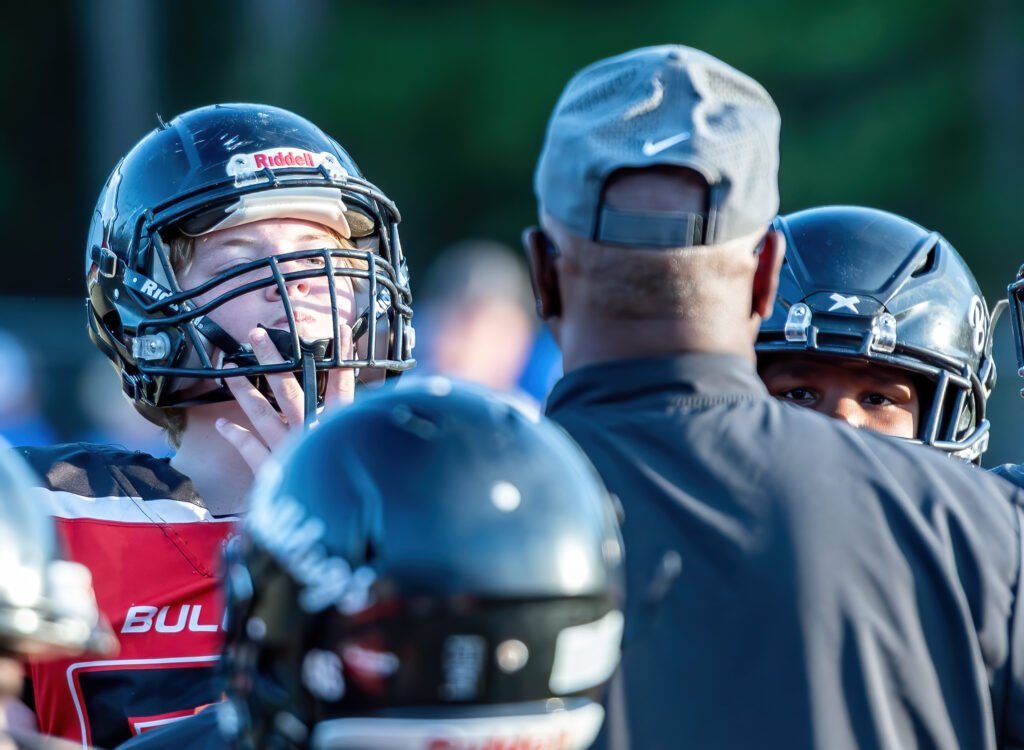
Coaches are needed today to help athletes grow regardless of how long they play the sport. The unfortunate part of sports is that you never know what your last day will be.That’s why you want players to make the most of every opportunity. But you must set them up for success. The first step in that is getting them to dedicate themselves to the team and the individual challenges of competition. Teach them that even if they are in a sport like tennis or golf, there is a process that can help them if they are dedicated.Dedication forces people to look inside themselves and determine what they believe in. Fundamental beliefs about life come into play because that’s what ultimately guides us through our days. If people get involved in something that doesn’t match their values, there will very probably be a conflict at some point. Athletes must find a fit between personal values and team values to be successful, and coaches are the ones who can help make this a reality. Every day is filled with challenges and decisions, and our values help us through it all.When there is a good fit, participation becomes easier. There is a chance to pursue both personal and team goals. There may be some struggles, but dedication and fit help it along.There may be conflict that is constructive. For instance, when there is a new coach or a change in the team, there will be an adjustment period as the coach adjusts the team’s values and fits them to personal values and expectations. This is a healthy transition time to build or realign a cohesive team. Here, dedication requires commitment to giving heart and soul in pursuit of achieving and maintaining that balance.In addition to dedication, your athletes need to accept accountability. Whatever happens, they must accept ownership and responsibility. This notion is not about finding blame, it is about focusing on what happened and finding ways to manage the outcome. Your athletes should find ways to duplicate good outcomes and increase them. Similarly, your athletes should work to mitigate or eliminate bad outcomes. This is done by analyzing what happened and trying to change what led up to the negative outcome.Dedication and accountability should be paired with sportsmanship. Sportsmanship is about winning and losing gracefully, but it is also about managing emotions in heated moments. In all sports, there are times when tempers flare. But we must control those emotions and treat each other as we want to be treated. It is everyone’s responsibility, not just the “antagonists,” to control situations and make sure they don’t get out of hand.“I tell my players not to say anything to anyone that you don’t want said to you,” said Michael Brown, head coach of the Berkeley Bulldogs middle school football team in Williamsburg, Va. “I urge them not to talk their way through the game unless they are talking to teammates. I want them to address competition between the whistles, then walk away from anything else.”Brown says dedication and accountability are not just for players. “I must be dedicated to our program, and I must be accountable for the good and the bad. Most important, I keep in mind that my players are always watching me. When I challenge an official’s call or disagree with another coach, I must be sure to do it correctly by controlling my emotions. The more I am in sync with my players, the more they will follow my actions. That’s important to keep in mind.”At the end of the day, it all comes back to dedication and accountability. Dedication is most important. Dedication is something that coaches must demand from themselves and their players. If it’s not there, your season will struggle at some point.NOTE: Coach Brown’s philosophy is 3D: Dedication, Detail, Discipline. The team must be dedicated to the task at hand, they must pay attention to the detail of what they’re taught and what they see, and they must be disciplined in all things. That includes family, faith, school, work, and sports.

3D COACHING: Dedication and Accountability Are Your Best Friends Read More »

whole logo jpeg

Sharing My 3D Philosophy

My 3D philosophy is dedicated to all the motivated girls and boys I had the pleasure to coach over the years. It was shaped with the help of all those Air Force people with whom I shared the sacrifice of serving the nation. I hope it helps you. Dedication requires that you commit to the task at hand and to your responsibility. Pay attention to the Detail in the teaching and training we receive. Use Discipline to always follow the rules in all situations. READ MORE

Sharing My 3D Philosophy Read More »

jeannine promo photo

Brown Featured in “Your Story Within” Podcast

Catch us LIVE Tomorrow (Thursday) at 11 a.m. ET on the Your Story Within Podcast! Episode 15: Ask a Military Author with special guests Sebastian Cimpoes and Dr. Michael Brown. I\’m really excited about this podcast, and I hope you can catch it live! Click here to watch LIVE at 11:00am, Thursday –> https://lnkd.in/d2MN7nE Click here to watch the replay –> https://lnkd.in/dYxqDCg

Brown Featured in “Your Story Within” Podcast Read More »

football 1675032 340

3D COACHING: They Are Always Watching

Months ago, a friend asked me how I came up with my 3D philosophy of dedication, detail, and discipline. She wanted to use it for the new team she was coaching and wondered how I came up with this approach for the players. My answer was that as much as I formalized it to help young athletes, I needed it to make ME better at coaching and leading. My goal is to always dedicate to lead, to manage the details of the task at hand, and to discipline myself to do what needs to be done when it needs to be done. This is the only way I can nurture the ability in myself to deliver those skills and abilities to others. Most athletes, most people, want a leader or leaders they can learn from and lean on. As I pondered these thoughts the other day, I was watching some sports highlights on YouTube. I started with Michael Jordan highlights, then watched great plays from college football, and then tuned to highlight films of potential scholarship players in basketball and football. I clicked the wrong link and I got something like “coaches gone wrong (not the real title).” This was a collection of videos where coaches lost their cool and composure in the heat of the competition. One coach threw a chair onto the basketball court to protest a call AFTER he was restrained from throwing a chair to protest a call. One coach berated an official giving a game ejection after her player’s unsportsmanlike conduct injured a player from the other team. The worst I saw was a recreation league coach hitting a player who he blamed for the team’s poor performance. These are all horrible events and I do not have to tell you that I did not watch much of those videos. But what little I did watch reminded me that the players are always WATCHING the coach. We coaches need to make sure that what they see is professional, appropriate, adult behavior. I believe most players are connected and committed to their coach and they want to please her or him. When a coach acts out and forgets how to behave in a sportsmanlike manner, the players are WATCHING. I remember a year when I watched a coach on the sidelines berating the official for several minutes before one of his players started berating the official. Please do not think I am saying I am perfect. I remember coaching a recreation league game many years ago and I thought the calls were horrible. Just as I started to throw my hat on the field in anger, I happened to make eye contact with a player. He was WATCHING. He stared straight in my eyes. Fortunately, I did not throw the hat and I swallowed whatever words I was going to say. It helped me to keep my wits about me. That lesson is with me every day. I know coaches sometimes want a penalty to possibly get their team going, but even that can be done with style and respect. I have seen coaches in various sports do this, but the good ones know how to do it without disrespecting the official. For instance, if I am coaching a football game and I want what I refer to as an “energy” penalty called, I just walk too far out on the field during play and I do not heed the official’s warning to get back. I get the penalty, I say it is not fair, and the players get new energy. That is how I do it. The point is that whatever coaches do, their players are WATCHING. They look up to you. Always do the right thing: dedication, detail, DISCIPLINE!

3D COACHING: They Are Always Watching Read More »

blog logo without silhouettes

3D COACHING: My Philosophy

When coaching, I follow a 3D principle, which is Dedication, Detail, and Discipline. In my approach, your team agrees to commit to be dedicated, focus on vital details, and honor discipline in all things. It all starts with the first D, which is about being dedicated to your team and to the task at hand. The second D is about paying attention to detail to make sure you do all the things required of you and making sure that you do each task correctly. The third D refers to discipline in all things, from family to school to team rules to personal accountability. I use 3D to continuously improve myself, to teach my players, and to make sure they are learning good techniques and sportsmanship.

3D COACHING: My Philosophy Read More »

Thoughts from a Coach

The late Vince Lombardi, hall of fame Green Bay Packers football coach, said, “Coaches who can outline plays on a blackboard are a dime a dozen.  The ones who win get inside their player and motivate.” Many of us are neither coaching nor playing sports right now, so I have had plenty of time to reflect on coaching.  Any thoughts I have on coaching are always fueled by how to motivate myself and my players to success. A good motivator helps by developing a shared understanding of the task at hand.  That is followed by demonstrating to those you want to motivate that they may not always be judged simply by winning and losing, because not everyone wins.  Show them that they are judged by the quality of each hour they spend accomplishing tasks.  Show them that their efforts tie directly to the benefits they will derive from participation. In return, these motivated people will decide what they want and then direct all their efforts on getting it.

Thoughts from a Coach Read More »

0