EI

Right Fit Leading Review

RFL: New book and interactive process highlight development of leaders and teams

The details are spelled out in my new book, The Right Fit Leading Process: EI-Based Team Building. I have developed an interactive process for training and developing teams that allows leaders and those they lead to work together in the same session or venue. In practice, it starts with an interactive discussion of emotional intelligence basics, then the process, then we use vignettes to apply what they have learned. Please contact me if you want to know more. Note: RFL is Right Fit Leading, our approach to the leader and member development journey.

RFL: New book and interactive process highlight development of leaders and teams Read More »

developing ei

RFL: Good Emotional Intelligence Achieves Win-Win Situations

Being good at Emotional Intelligence (EI) can help you achieve win-win situations. For me, the bottom line of EI is to understand your emotions, and the way you do things based on those emotions, and to understand the emotions of people around you and the way they do things based on those emotions. Then you try to find a balance, a collaboration, or a win-win situation. Once you start to understand those emotions, you can think about them and take some action. After a recent speech in Chicago, Illinois, someone asked me why I am so fond of EI. My answer was that EI forces me to assess myself in relation to those around me. It drives me to seek balance or to create collaboration. Once you start to understand those emotions, you can think about them and take some action. Leading or following using EI principles means that you accept the need to engage, to communicate, and to pursue shared understanding. EI can be really simple if you can understand yourself and how you react. It can help you if you understand others with whom you interact, and then examine how they react to their emotions. Then you can try to find a middle ground. It might not be middle ground; it might be 60-40 in someone’s favor to get it to work. But you must remember that the only way that you’re going to understand their emotions and the way they react is to engage.   Note: RFL is Right Fit Leading, our approach to the leader and member development journey.

RFL: Good Emotional Intelligence Achieves Win-Win Situations Read More »

blog logo without silhouettes

3D COACHING: My Philosophy

When coaching, I follow a 3D principle, which is Dedication, Detail, and Discipline. In my approach, your team agrees to commit to be dedicated, focus on vital details, and honor discipline in all things. It all starts with the first D, which is about being dedicated to your team and to the task at hand. The second D is about paying attention to detail to make sure you do all the things required of you and making sure that you do each task correctly. The third D refers to discipline in all things, from family to school to team rules to personal accountability. I use 3D to continuously improve myself, to teach my players, and to make sure they are learning good techniques and sportsmanship.

3D COACHING: My Philosophy Read More »

emotional intelligence in the workplace sample small

Right Fit Leading: EI in the Workplace

I had a great time November 10 talking about Emotional Intelligence in the Workplace in a Lunch and Learn Event for Canon Virginia, Inc., Newport News, Va. I presented a webinar to discuss the best ways to improve your team with EI. EI is the ability to sense, understand, and effectively apply the power and acumen of emotions as a source of human energy, information, trust, creativity, and influence. EI has five key components: self-awareness, self-regulation, social skill, empathy, and motivation. I am always willing to talk about EI. You can view a sample of the briefing here.

Right Fit Leading: EI in the Workplace Read More »

mil art

Right Fit Leading: More on Motivationally Intelligent Leadership

I have already posted about emotional intelligence (EI), as have many experts in various fields of endeavor. I have also recently discussed how engaged interaction and EI combine to foster success. Engaged interaction employs flexible, full-range communications to ensure that all parties listen, hear, and understand, and that all parties continue the interaction until shared understanding is achieved. Success in these areas can deliver career success, helping leaders and teams build a collaborative culture, emphasize everyone’s strengths, and work to improve weaknesses.  Now I wish to share with you motivationally intelligent leadership, which starts with emotional intelligence. This helps leaders learn and master six leadership styles: coercive, authoritative, affiliative, democratic, pacesetting, and coaching according to experts in this area. Paying attention to your and to the emotions of others can save time by directing energies more effectively and by expanding opportunities throughout the organization. Teams can employ strategic flexibility to drive intentional changes and adapt to environmental influences. Strategic flexibility is changing the message in response to internal and external influences to increase the chances that the message will achieve its desired result. There are several steps: (1) Assess the situation; (2) Evaluate the communication environment; (3) Use various skills (tone of voice, gestures, expressions, body language, etc.); (4) Be creative; (5) Don’t be afraid to adapt or change; and (6) Reassess and reevaluate.


Right Fit Leading: More on Motivationally Intelligent Leadership Read More »

Right Fit Leading: Increasing Leader Emotional Intelligence

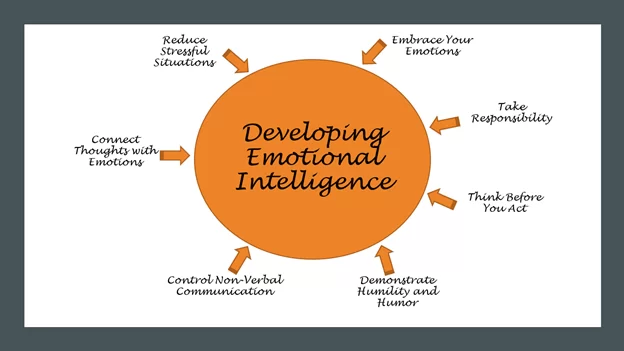
As I continue learning about emotional intelligence, I develop my own list of things I need to do to increase it. EI requires that you know yourself and your emotions.  It requires honest self-analysis and an ability to manage your emotions.  It provides a basis to understand employees, because it is the ability to sense, understand and effectively apply the power and acumen of emotions as a source of human energy, information, trust, creativity and influence.  Those who possess emotional intelligence can effectively acknowledge and value feelings in themselves and in others, and can respond to those feelings in an effective way.  Paying attention to emotions can save the leader time by directing energies more effectively and expanding opportunities. So here is my list that keeps me on the path to my leadership goals. Look in the mirror. Know who you are and what you stand for. Articulate who you are and what you stand for. Focus on who you are and what you stand for. And when things get tough, be true to who you are and what you stand for. What\’s on your list of ways to increase your emotional intelligence?

Right Fit Leading: Increasing Leader Emotional Intelligence Read More »

0