
empathy

38

The RFL Process: Achieve Shared Understanding

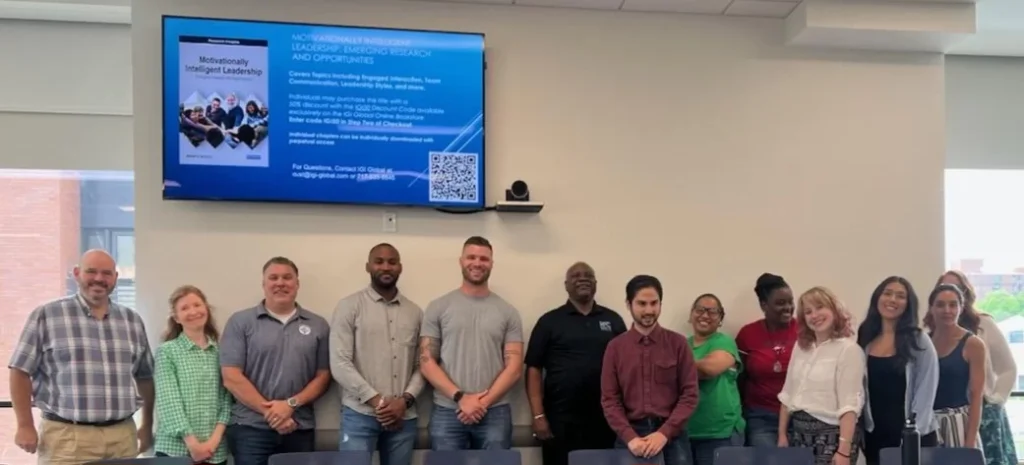
Teaching emotional intelligence and leadership skills should be a two-way exchange of ideas and theories to achieve shared understanding. An example is my second presentation at the University of Connecticut at Hartford in June. This presentation continues my focus on The Right Fit Leading Process and win-win outcomes. Using The RFL Process is valuable because educators, and leaders, should value relationships that create and nurture shared understanding. The RFL Process provides a method to handle leader and team development in any situation through sound principles of philosophy, inspiration, and motivation. Emotional Intelligence (EI) is important in all these activities. Leaders and teams must work together to handle interpersonal or work relationships with fairness and good judgment. My sessions also touch on empathy, team cohesion, and situational leadership including Leader Member Exchange (LMX) Theory. Focusing on these constructs creates participative discussions in sessions that allow me to delve into case studies and real-life situations with equal enthusiasm. Please let me know if you want my help with this kind of training and development.

The RFL Process: Achieve Shared Understanding Read More »
35542 1 1

Executive Leadership Session

I enjoyed today\’s great session with the energetic students at the University of Connecticut at Hartford\’s Executive Leadership Course. During our session, we discussed The Right Fit Leading Process, building emotionally-intelligent teams, creating relationships, and achieving shared understanding. We then progressed to analyzing case studies to closely examine trust in terms of how it is developed and nurtured. I want to thank Dr. Mohamad Alkadry, director of the UCONN School of Public Policy, for this opportunity to engage.

Executive Leadership Session Read More »

personal 1264695 1920

Improving Your emotional Intelligence

I had a great day today presenting Improving Your Emotional Intelligence: Creating a Win-Win Collaborative Culture. I gave the speech to a client conference in Chicago with more than 100 attendees. What was the highlight of my interactive presentation? The importance of remembering that a win-win collaborative culture leads to shared understanding. There are many things you can talk about when building or improving your culture. You can discuss emotional intelligence, empathy, engagement, organizational development, or even about training. My main point is that the win-win and shared understanding aspects are what make my presentation a little different than others.

Improving Your emotional Intelligence Read More »

freepik img1 use the same sames uniform black corporate su 61729

RFL: Leadership is an Action

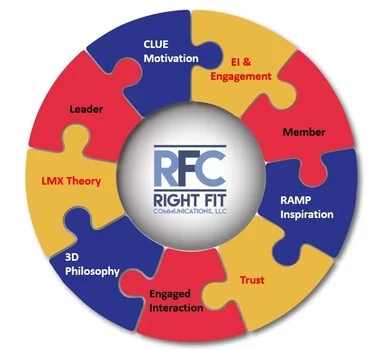
Leadership is not about what you say, it is about what you do. The key to leadership is whether what you do resonates with those you lead. If you are emotionally intelligent, empathic, engaging, and collaborative, it should be evident in your actions. This is just as important as what you say. If you listen intently and adjust to the feedback you’re receiving, it will influence and motivate actions that matter. What I’m talking about is sharing your skills and your passion with those you lead. Seek out win-win relationships that strive for shared understanding and, when you don’t have it, stop and work on it. Leadership is a state of mind that you should share with your team. The team is watching you, and the team will follow you if your actions are worthy of it. More important, they will be your partners in achieving mission accomplishment. NOTE: The Right Fit Leading (RFL) Process addresses the need to change the focus of training from the traditional leader-centric philosophy to one of engagement, interaction, and collaboration. This creates an atmosphere where leaders and those they lead have equal opportunities to affect the leader-follower relationship that is required in effective teams. The RFL Process promotes the creation of effective teams because it is based on emotional intelligence and empathy for all members, regardless of their position or level of responsibility. The RFL Process addresses a consistent philosophy of how we lead and follow. It suggests that we must inspire ourselves and others. It also demonstrates the need to motivate ourselves and others to take on challenges that we might not attempt otherwise. We use emotional intelligence (EI) and empathy, engagement, LMX Theory, and knowledge about the meaning of trust and how it is developed and nurtured. At this point, development can turn its focus to what is needed for each leader and member. We use the principle of engaged interaction to help leader and team development subjects arrive at a shared understanding.

RFL: Leadership is an Action Read More »

leader member development overview wheel small (1)

The Right Fit Leading Process

The Right Fit Leading Process is not new. What is new is the way that new research in the areas of emotional intelligence, empathy, trust, team development. That means a host of other leadership considerations have come together for me. It is now clearer than ever that the way to build successful organizations is to develop leaders and members together and let them engage to find shared understanding. It is no longer enough to develop leaders. We must build teams where leaders and those they lead partner in developing philosophy, inspiration, and motivation. The Right Fit Leading Process has as its foundation emotional intelligence and empathy. These are collaboratively developed for the leader and the member or follower. We use engaged interaction to develop leaders and members at the same time through collaborative training methods. The basics of our focus always include EI and engagement, LMX Theory, and trust. The process focuses on a consistent philosophy of the way we lead and follow. The process suggests that all members of the organization have a responsibility to inspire themselves and others. That means the organization needs work relationships where people at all levels motivate themselves and others to take on challenges that they might not attempt otherwise. The process can help leaders and those they lead in diverse types of organizations and industries. The process can develop teams, leaders, and members, promoting trust, engagement, and other benefits that can lead to success and growth. Please contact me if you want to know more about the Right Fit Leading Process.   NOTE: Graphic courtesy of Hafsa Akhter, SA Digitech

The Right Fit Leading Process Read More »

rfl process

Right Fit Leading: Philosophy, Inspiration, and Motivation

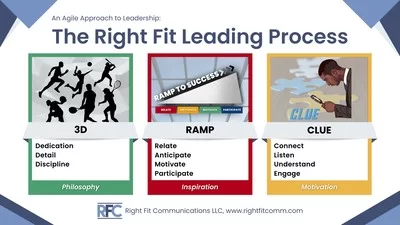
Dr. Brown’s research and engagements support the belief that good leadership is about philosophy, inspiration, and motivation. The Right Fit Leading Process is based on emotional intelligence and empathy for the leader and the member or follower. The process focuses on a consistent philosophy of the way we lead and follow. It suggests that we must inspire ourselves and others. Finally, it recommends that we motivate ourselves and others to take on challenges that we might not attempt otherwise. The process can help leaders and those they lead in diverse types of organizations and industries. The process is complementary to trust research from some dynamic colleagues. In the coming weeks, Dr. Brown will be sharing the details of this process.

Right Fit Leading: Philosophy, Inspiration, and Motivation Read More »

returning small

Book Excerpt: About Emotional Intelligence and empathy

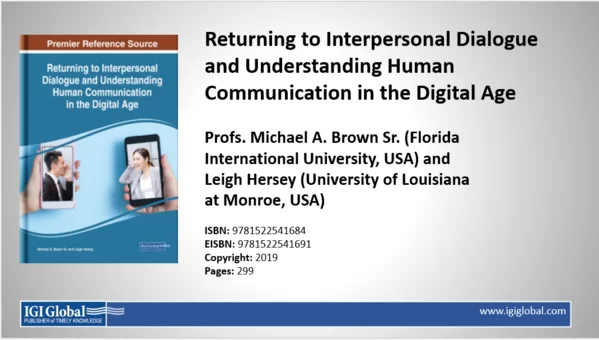
This excerpt offers good information on emotional intelligence (EI) and empathy. You can purchase relevant chapters by selecting the link “Access This Chapter” at the bottom. Book Excerpt, Chapter 10, Page 204 The rise of EI and the continuing growth of online interactions work together to demonstrate the importance of participatory decision making as a motivational technique. However, participation in decisions requires that the leader act in a prosocial manner, focusing on outcomes that are beneficial to more than just the leader. A prosocial attitude leads to creation of buy-in through shared value and good management of emotions, requiring skill in both EI and empathetic approaches. EI is about connecting with one\’s own emotions and those of others to enable effective leadership communication. Empathy is the ability to understand someone else\’s emotions, feel them as if they were yours, and even to take some action in support or mitigation of those feelings. The lack of feedback or agreements on shared value in online interactions are highlighted when people are forced into face-to-face interactions and are subsequently unable to find these important communication tools. This chapter offers a new approach to leadership communication. Access This Chapter!

Book Excerpt: About Emotional Intelligence and empathy Read More »

diapositiva1 small

Info Series: Training the Leader

My conversations with leaders often focus on training. Lately, they indicate a need to change the focus of training the leader from the traditional leader-centric philosophy to one of engagement, interaction, and collaboration. This creates an atmosphere where leaders and those they lead have equal opportunities to affect the leader-follower relationship. Over the last 2 years, I have taken a closer look at leadership training for various education and business projects. The analysis suggests that a lot of training courses, regardless of type (i.e., prescriptive, elective, etc.) is rooted in an authoritative approach. This approach shows the predominance of leadership styles expected and/or taught are dictated and driven by the leader/supervisor.  Likewise, these styles are steeped in the expectation that the leader/supervisor can define his/her level of feedback, with little to no emotional investment involved with subordinates. In addition, this approach suggests that the success of the leader/supervisor-follower relationship is the lone responsibility of the leader/supervisor.  I say this thinking has some flaws, and this style of training misses the mark. The flaws can limit maximizing the interactive engagement in an effective leader/supervisor-follower relationship. Instead, what is perpetuated is a “disengaged” relationship in the work environment, a lack of understanding between leader/supervisor-follower teams, and poor collaboration toward meeting a desired end state. My continuing research, led me to \”Training the Leader Trajectory: Focusing on People, Empathy, and Emotional Intelligence (EI) in the Workplace.” Achieve an equitable work culture where all members, regardless of their role, have equal participation and decision-making ability in the operations and culture of the organization. This ensures that emotions and empathy are inherent to the leadership style. Then, feedback is encouraged and expected of all parties, all parties can become emotionally invested in their efforts, and everyone strives toward greater collaboration and teamwork. I am excited about how this is developing. Please let me know if you would like to know more about my approach to leader training.

Info Series: Training the Leader Read More »

productivity graphic e1658281591420

IABC Review: Leading Effectively With 3D, EI, Empathy

I spoke about leading and communicating at the International Association of Business Communicators (IABC) World Conference 2022 on June 27, 2022 in New York. The focus was engaged interaction and how communication creates strong relationships where leaders and members interact and achieve shared understanding. An interactive communication approach is one that leverages the skills and abilities of all team members. This approach also promotes a situation where everyone contributes. My formula for success is to take advantage of the benefits of a leader exchange theory. That means we are applying empathy to leadership communications, and using Emotional Intelligence (EI). I guide my efforts using my leadership focus, 3D, to be effective using these and other tools. The definition of 3D is Dedication, Detail, Discipline. This says we need to be dedicated so that we prepare, perform, and motivate every step of the way. It is important to pay attention to detail, creating shared understanding to enhance strengths and improve weaknesses. We must be disciplined, following rules to be the best we can always in all situations. Leaders should create strong relationships where they bond with and inspire members. The resulting improvements in the workplace can deliver increased personal and professional growth. Leaders also will deliver improved productivity and performance. This may also foster the creation of new ideas. We must compare performance and productivity. Performance focuses on output only, while productivity focuses on output in relation to input. I will continue to cover these areas with my colleagues. Please don’t hesitate to reach out if you’re interested in these topics.

IABC Review: Leading Effectively With 3D, EI, Empathy Read More »

right fit leading info series (1)

Right Fit Info Series: Teaching Plan Summaries Available

I have had a busy June talking to people about understanding and employing empathy and emotional intelligence (EI). I engaged with audiences about achieving shared understanding and building trust. The conversations and consultations have been so rewarding that I created four teaching plans that are readily available in my portfolio. I would be happy to discuss any of these plans with you. #emotionalintelligence #empathy #trust #iabc22 #iabc2022 #iabcwc Leadership Solutions in a Hybrid Workplace  1. Leaders in a hybrid workplace have special challenges that we can generalize as “distance.” Distance is a disconnected aspect that can occur in the work relationship at times that are important, such as when operations or personnel changes take place. It concerns accomplishments that are crucial to job satisfaction, recognition, promotion, and other factors that contribute to the quality of work life. Organizations need collective agreements that guide teams and foster shared understanding, collaboration, and innovation. This plan is based on the book 

Right Fit Info Series: Teaching Plan Summaries Available Read More »

0