Motivation

How to Get More Motivated in 7 Steps

Whether you need to get work finished or can’t seem to get off your couch, learning how to get more motivated can be an essential skill. Building motivation doesn’t have to be complicated. The process can be incredibly simple if you allow it to be. Consider these 7 steps when learning how to get more motivated. 1.  Determine Where Your Motivation Is Failing The first step in getting more motivated is to find out why yours is failing. Perhaps you are overwhelmed and don’t know where to start. Or maybe you think planning everything out perfectly is necessary before action begins. Discovering where your motivation failure begins can be critical to understanding what comes next. a.   Too Many Goals – Focus on One Many people who set goals and fail to adequately chase them have set too many. Doing so typically brings about overwhelm and burnout, resulting in none of the goals seeing success. Choose one goal to focus on when your motivation is unsteady. b.   Make it Public Private goals are easy to ignore because there is no one to disappoint but yourself. When you make your goals known, you are held accountable to others. c.   Perfectionism Perfectionism is a motivation demolisher. When you can’t figure out how to get more motivated despite the desire to put forth your best, consider trying for “good enough.” 2.  Develop a Disciplined Routine Creating a routine can be vital to the success of any task or goal. Motivation ebbs and flows. It cannot always be relied upon. Instead, a routine that creates a habit ensures that everything that should get done is completed. Try adding a task that you have trouble starting to something you do every day. For instance, if your email is overloaded and you’re procrastinating getting through it, start by answering or deleting five emails each time you pour a fresh cup of coffee. 3.  How to Get More Motivated with Joy It may seem strange that seeking joy can cure a lack of motivation, but the truth is, it works. According to Six Seconds, a nonprofit for emotional intelligence, people who regularly anticipate small joys experience higher levels of motivation. Consider these ideas to find some joy: 4.  Figure Out Who Inspires You Who most inspires you? Perhaps it’s a historical figure who changed the game, or it could be your mom or dad. Maybe it’s an old boss who could always get you moving. Whoever it is, list ways that you might model their behavior or inspiration. When the motivation isn’t flowing, you can pull out your list and try something that worked for them. 5.  How to Get More Motivated with Grace Getting down on yourself for your lack of motivation rarely generates the response necessary for the brain to get started. The Mayo Clinic suggests that positive thinking can decrease stress. Since stress is often a component of overwhelm, it may be ideal to give yourself a little grace. It may begin with a small step in the right direction. Take Small Steps Often, people start headfirst into the big picture. While it is helpful to know where you are going, the journey can be long. Instead of trying to make giant leaps toward massive goals, break bigger goals down into baby steps. Each time a smaller goal is accomplished, you can build momentum toward the big picture. The simple act of making your goals smaller is infused with grace! 6.  Ask for Help Here’s a lesson to learn: you don’t have to do everything on your own! Independence is a great ability, but it doesn’t mean you can’t ask for help. Ask a trusted friend or advisor how they maintain momentum. Or, you may even ask someone for help with a task. Removing something from your plate can help you focus on what you must do. 7.  Make Plans with Others If you are constantly trying to figure out how to get more motivated, something isn’t sticking. When you cannot maintain motivation on your own, it’s time to make firm plans with someone else. Maybe for you, that looks like signing up for the 5K in two months with a group of friends. Or, it could be splitting the cost of a coworking space with another friend who works from home. It may even be investing in a Right Fit Communications course on leadership and taking it with a coworker. Making plans with someone else will help you to stay the course. How to Get More Motivated: Conclusion You’ve read the 7 steps on how to get more motivated. The question is, are you ready to take action? Or will you simply read another article on the same topic? Get going. Your goals are calling.

How to Get More Motivated in 7 Steps Read More »

leadership vs management

Leadership Development vs Management Training: Key Differences

At first glance, leadership and management often seem like the same thing. In many organizations, the terms are used interchangeably. Someone gets promoted, and suddenly they’re expected to lead and manage at the same time. But when you look more closely, the difference between leadership and management becomes much clearer. And that’s where understanding leadership vs management really matters — especially for organizations trying to grow in a structured and sustainable way. At the same time, many businesses invest in training without fully understanding what they actually need. Should they focus on leadership development? Or management training? The answer isn’t always obvious. But once you understand how both roles function, the gap between leadership vs management becomes easier to identify. What Is Leadership Development? Leadership development focuses on building the ability to guide, inspire, and influence others. It’s less about tasks and more about people. Leadership development typically includes: In the context of leadership vs management, leadership is about direction — not just execution. What Is Management Training? Management training focuses on handling processes, tasks, and operations. Managers are responsible for: In simple terms, management is about structure, while leadership is about influence. That’s where the distinction in leadership vs management becomes more practical. Key Differences Between Leadership and Management 1. Focus: People vs Processes One of the biggest differences in leadership vs management is focus. Leaders focus on: Managers focus on: Both are important, but they serve different purposes. 2. Approach to Change Leaders drive change. Managers maintain stability. In the discussion of leadership vs management, this difference becomes critical. Leaders: Managers: 3. Decision-Making Style Leaders often make decisions based on vision and long-term impact. Managers focus on immediate needs and operational efficiency. This difference highlights how leadership vs management influences how decisions are made. 4. Relationship with Teams Leaders build trust and emotional connection. Managers ensure accountability and structure. In leadership vs management, this difference affects team dynamics significantly. 5. Time Perspective Leaders think long-term. Managers think short-term. This balance is essential for organizational success. Why Organizations Need Both It’s easy to think one is more important than the other. But that’s not really accurate. Organizations need both leadership and management. Without leadership: Without management: That’s why understanding leadership vs management helps organizations build a balanced system. A Practical Example Imagine a company launching a new project. The leader: The manager: Both roles are necessary. And together, they create results. How Organizations Can Develop Both At Right Fit Communications LLC, organizations focus on both leadership and management development. They help businesses: According to Harvard Business Review, organizations that balance leadership and management perform more effectively in the long term. Key Takeaways FAQ 1. What is the difference between leadership and management? Leadership focuses on guiding people, while management focuses on handling tasks and processes. 2. Is leadership more important than management? No, both are equally important for organizational success. 3. Can a person be both a leader and a manager? Yes, many roles require a combination of both skills. 4. Why is leadership development important? It helps organizations build strong direction and inspire teams. 5. What does management training improve? It improves efficiency, structure, and task execution. Conclusion The difference between leadership and management might seem subtle at first. But once you understand it, it becomes much easier to see how each role contributes to business success. And more importantly, how both are needed together. Understanding leadership vs management is not about choosing one over the other. It’s about building a balance — where vision and execution work side by side. Because in the end, growth doesn’t come from one role alone… it comes from both working together.

Leadership Development vs Management Training: Key Differences Read More »

leadership training benefits

How Leadership Training Improves Employee Performance

If you look at most organizations closely… performance issues rarely come from lack of effort. People usually try. They show up, they work, they meet deadlines. But still, something feels missing. That’s where leadership training benefits start to become visible — not instantly, but gradually. Because the way leaders guide, support, and communicate has a direct impact on how employees perform. And without proper training, even good leaders can struggle to bring out the best in their teams. What Leadership Training Actually Does Leadership training is often misunderstood. Some think it’s just workshops or seminars. Others see it as something only senior leaders need. But in reality, leadership training focuses on: And the real leadership training benefits come from applying these skills in daily work — not just learning them. How Leadership Training Improves Employee Performance 1. Leadership Training Benefits Improve Clarity When leaders are trained properly, they communicate expectations more clearly. Employees understand: This clarity reduces confusion and improves performance over time. 2. Better Leadership Builds Stronger Teams One of the key leadership training benefits is improved team relationships. Trained leaders: And this creates a more stable work environment. 3. Improved Decision-Making Untrained leaders often hesitate or overthink. With proper training, leaders: This directly impacts how efficiently teams perform. 4. Increased Employee Motivation Employees respond to leadership. When leadership improves, employees: This is one of the most noticeable leadership training benefits in any organization. What Happens Without Leadership Training Without training, leaders may: And over time, this affects employee performance. Even skilled employees can underperform without proper guidance. Real-World Scenario A team with unclear leadership often: But with trained leadership: The difference isn’t dramatic overnight — but it’s consistent. How to Implement Leadership Training At Right Fit Communications LLC, organizations improve leadership through structured programs According to Harvard Business Review, leadership development significantly improves employee engagement and performance. Key Takeaways FAQ What are leadership training benefits? They are improvements in leadership skills that positively impact employee performance. Does leadership training improve productivity? Yes, it helps leaders guide teams more effectively, improving overall output. Conclusion Leadership training might seem like an extra step. But over time, it becomes essential. Because when leaders improve, employees perform better — and that’s where real growth begins.

How Leadership Training Improves Employee Performance Read More »

emotional intelligence leadership

The Role of Emotional Intelligence in Effective Leadership

Leadership isn’t just about decisions or strategy. It’s also about understanding people. And that’s where emotional intelligence leadership becomes important. Because no matter how skilled a leader is technically, their ability to manage emotions — both their own and others’ — shapes how effective they really are. What Emotional Intelligence Means in Leadership Emotional intelligence includes: When applied in leadership, it becomes emotional intelligence leadership — a skill that helps leaders connect with their teams. Why Emotional Intelligence Matters 1. Improves Communication Leaders with strong emotional intelligence leadership communicate more clearly and thoughtfully. They understand tone, timing, and delivery — which reduces misunderstandings. 2. Builds Stronger Relationships Trust is built through understanding. With emotional intelligence leadership, leaders: 3. Helps in Conflict Resolution Workplace conflicts are unavoidable. But leaders with emotional intelligence: 4. Enhances Decision-Making Emotions often affect decisions. With emotional intelligence leadership, leaders: Without Emotional Intelligence Leaders may: And this impacts overall performance. Practical Example A leader reacts negatively under pressure. The team becomes stressed. Performance drops. Now compare that with emotionally aware leadership: That difference matters. Developing Emotional Intelligence At Right Fit Communications LLC, organizations build emotional intelligence through leadership programs. According to Daniel Goleman, emotional intelligence is one of the most important leadership traits. Key Takeaways FAQ What is emotional intelligence in leadership? It is the ability to understand and manage emotions in leadership situations. Why is emotional intelligence important? It improves communication, trust, and decision-making. Conclusion Leadership isn’t just about control or authority. It’s about understanding people. And when leaders develop emotional intelligence, everything else — communication, trust, performance — starts to improve naturally.

The Role of Emotional Intelligence in Effective Leadership Read More »

Make the most of your ethics, dedication, and results

Right Fit Leading: Make the most of your ethics, dedication, and results

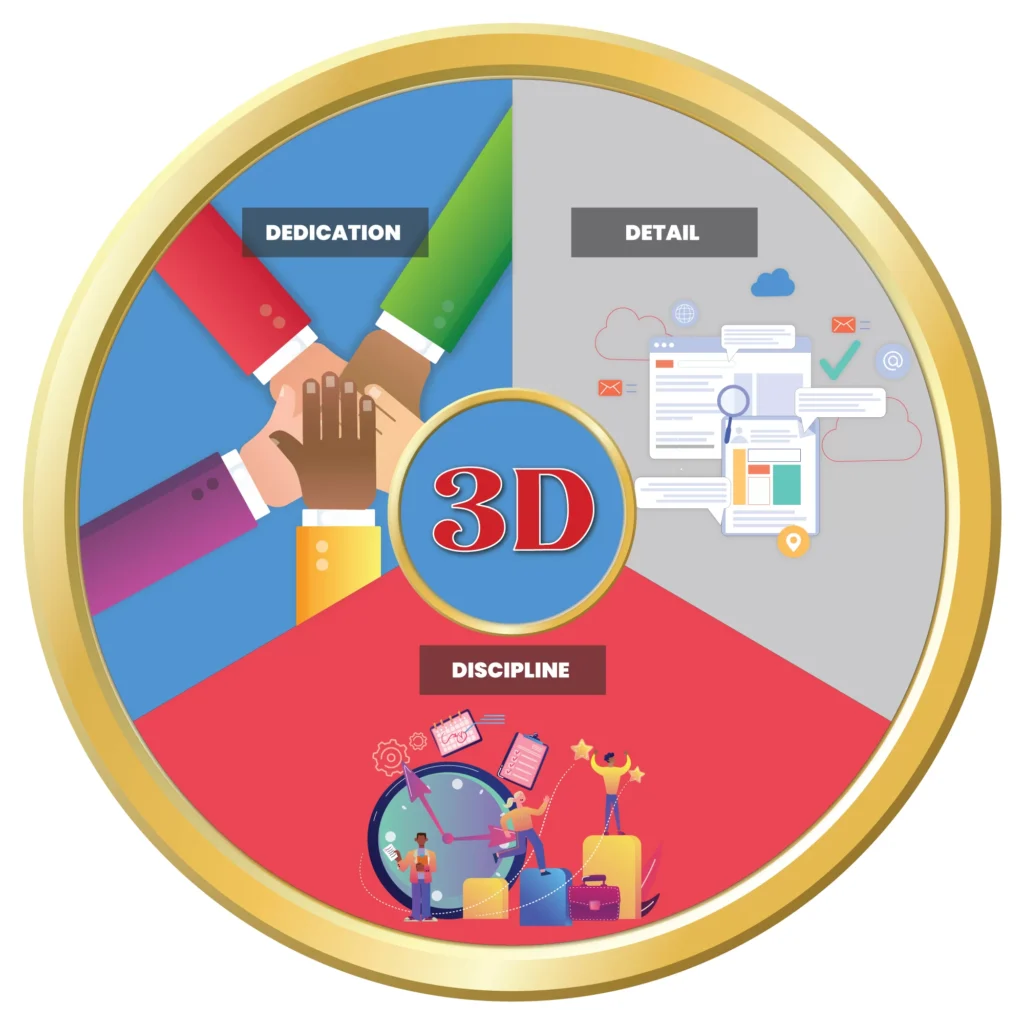
Leadership must be guided by ethical actions, focused on being dedicated to others and to self, and solidified with tangible results. As leaders, we must build relationships that both take care of people and solidify organizations. As team members, we must share accountability with leadership to achieve a shared understanding of the path we will travel to success. Success is found in helping ourselves and others become more than we believe we could be. The 3D Philosophy — Dedication, Detail, and Discipline — strengthens leadership through clarity, confidence, and accountability, promoting shared understanding and inspiring deeper exploration. There are several keys to making organizational development successful. Employ the help of Motivation Magnets to strengthen your tea. A Motivation Magnet is a trusted, respected team member whose honesty, consistency, and character elevate everyone participation. They inspire effort, uphold discipline, and lighten the leadership load by exemplifying loyalty, authenticity, and steady influence. Make a leader investment in you: In all these suggestions, one must find a balance. Prioritize individual and team needs, support everyone in a way that enriches them, and start by listening fully. Then, invest in growth, address issues early and track your performance by listening to the data. While building your team, reinforce role clarity and dependable performance. Promote loyalty, respect, and team-first behavior, then recognize and reward performance, honesty, and consistency. It is important to share responsibility and ownership where possible and to use clear standards.

Right Fit Leading: Make the most of your ethics, dedication, and results Read More »

Saluting African American Leaders

Right Fit Leading: Saluting African American Leaders

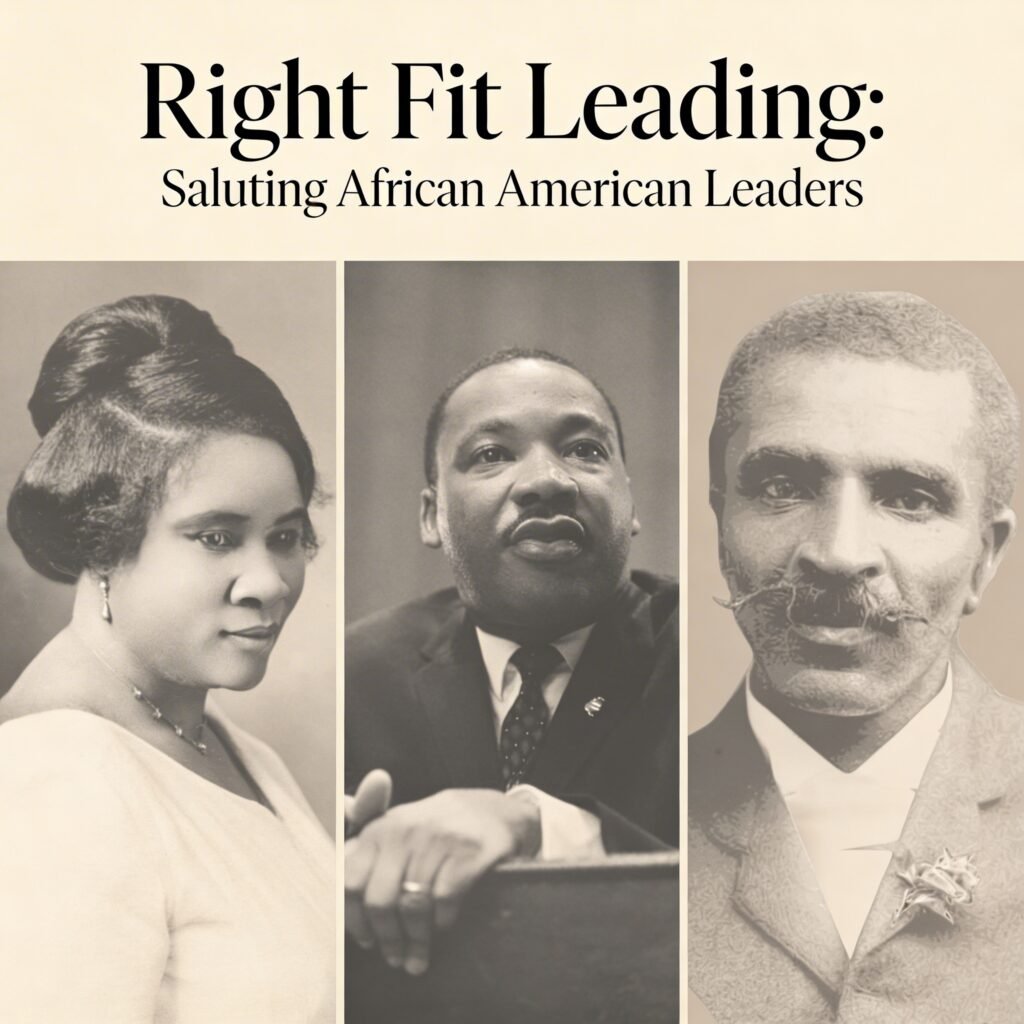
In honor of Black History Month, we want to highlight a few leaders from the National Archives and other sources. Please feel free to think about some of the countless others we can emulate. Our voice is more important than ever. Stay curious, find the data, and share informed messages using your voice. Martin Luther King, Jr. (January 15, 1929 – April 4, 1968) Image by WikiImages from Pixabay Dr. Martin Luther King, Jr. was one of the most important and influential Civil Rights leaders in the 1950s and 1960s. The cornerstones of his activism were based on non-violence and civil disobedience, both of which were inspired by his Christian faith and the teachings of Mahatma Gandhi. His words live on today. Madam C.J. Walker (1867-1919) https://www.history.com/articles/madame-c-j-walker Creating a line of hair products geared toward Black hair propelled Madam C.J. Walker to be the first African American woman to be a self-mad millionaire. According to Oprah Daily, “rst African American woman to become a self-made millionaire after creating a line of hair She created the first, Madam Walker’s Wonderful Hair Grower, in 1905. A Netflix series based upon her life, Self Made, premiered in March 2020.” George Washington Carver (1864-1943) Image by OpenClipart-Vectors  from Pixabay George Washington Carver was an agricultural chemist who wanted to increase the profitability of peanuts and sweet potatoes. His experiments in 1896 (revealed in 1914) led to 518 new products from the crops, including ink, dye, soap, cosmetics, flour, vinegar, and synthetic rubber. He is also known for giving us peanut butter. There are others, Barack and Michelle Obama, Kamala Harris, Shirley Chisholm, Gen. Benjamin O. Davis, Malcolm X, Stevie Wonder, Jesse Owens and others too numerous to mention. There are countless others who created our past, present, and future. Salute them all! Honor them all!  #BlackHistoryMonth

Right Fit Leading: Saluting African American Leaders Read More »

whole logo jpeg

Right Fit Leading: Leading From Behind

Great organizational development demands that all members communicate and contribute to mission accomplishment. That means that each person should dedicate themselves to lead the effort from their seat. Leader or follower, you have an opportunity to influence the bottom line.Right Fit Communications LLC provides personal and organizational development for the whole team. Group training sessions emphasize two-way communication, dedication, and shared understanding to achieve win-win outcomes. This approach addresses the WIIFM – What’s in it for me?Collaborative leadership allows skill development in philosophy, inspiration, and motivation. Everyone getting the training is exposed to the same information and the same conversations at the same time. This approach seeks to create effective relationships and effective teams and to provide outcomes that can be immediately applied in the workplace.During training, leaders and team members use emotional intelligence (EI) and empathy to make a connection. This allows trainees to master their own emotions and those of others. It relies on effective engagement, and it fosters the pursuit of win-win situations that create shared understanding. The benefit is that organizational relationships improve as trust develops, and as people work on cultural developments.By changing the focus of training from the traditional leader-centric philosophy to one of engagement, interaction, and collaboration, The Right Fit Leading (RFL) Process delivers organizational development. This creates an atmosphere where leaders and those they lead have equal opportunities to affect the leader-follower relationship that effective teams need.The RFL Process promotes the creation of effective teams because it is based on emotional intelligence and empathy for all members and it addresses a consistent philosophy of how we lead and follow. Inspiration develops as we motivate ourselves and others to take on challenges that we might not attempt otherwise.The RFL Process can help you grow shared understanding. Learn more at rightfitcomm.com.

Right Fit Leading: Leading From Behind Read More »

bring back sportsmanship

We need to bring sportsmanship and discipline back

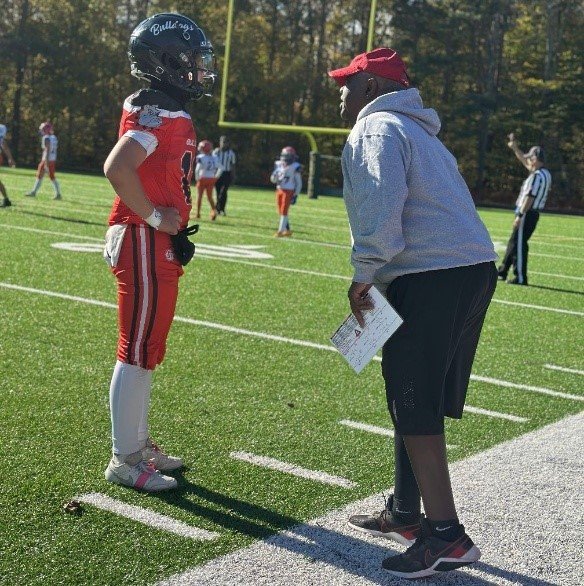
I am a middle school head coach, and I have been scrolling through social media for months, looking at sports-related posts.My conclusion is that there is an urgent need to bring sportsmanship and discipline back. Let me share my thoughts on three things: sportsmanship, discipline, and kindness.I believe as everyone does that athletes have the right to celebrate. But celebrations should not come at the expense of another person or your team. There is no need to antagonize your opponent after the game. The final score does that. It is important to make sure that our celebrations reflect well on our team, our school, our community, and our family.Discipline is the ability to manage your emotions and actions. For instance, years ago, I watched with dismay an ejected player attacking the game official. He obviously ignored that fact that his ejection was a consequence of his actions on the field. But that is only one example. I see parents attacking coaches, referees, and each other. I hear coaches and players using inappropriate language.Everyone must remember that there are consequences for our actions. Too many times, we get emotional and we act and then think. Discipline helps us think about our actions before carrying them out, weighing whether what we intend to do is right or wrong.The sports world also needs kindness. We see plenty of it: a player gives her jersey to a fan, a player gives the ball to a fan, athletes sign autographs, and athletes visit those less fortunate than themselves. If we are kind, the images I mention replace the inappropriate images and actions.Coaches must establish a great, competitive atmosphere. They should stress competing with commitment, losing with honor, and winning with dignity. Coaches should always consider the environment they are creating because the team is always watching!Athletes, at least initially, try to mimic the behavior and the culture of the coaching staff. If they see professional, appropriate behavior, they follow those actions. Similarly, if they see overly aggressive outward behavior, they follow those actions. This is their coping mechanism, especially if they have not formed their own sense of commitment, sportsmanship, and discipline.Several years ago, I was coaching at a high school and I watched an opposing coach berating the official for several minutes, and then one of his players started berating the official. I assure you; I am not perfect. For instance, I remember coaching a recreation league game many years ago and I thought the calls were horrible. I started to throw my hat on the field in anger, but one of my players caught my eye. He was WATCHING. He stared straight into my eyes. Fortunately, I did not throw the hat, and I swallowed whatever words I was going to say. It helped me to keep my wits about me.I keep that lesson with me every day. Sometimes coaches want a penalty to possibly get their team going, but even that can be done with style and respect. Many coaches in many sports at many levels do this, but the good ones know how to do it without disrespecting the official or the game. When I need an “energy” penalty for my team, I just walk too far out on the field during play and do not step back when told to do so. I get the penalty, I say it is not fair, and the players get new energy.I am grounded by my 3D Philosophy: DEDICATION, DETAIL, and DISCIPLINE.• Ded·i·ca·tion /dedəˈkāSH(ə)n/. Noun: the quality of being dedicated or committed to a task or purpose.• De·tail /dəˈtāl,ˈdētāl/. Noun: an individual feature, fact, or item.• Dis·ci·pline /ˈdisəplən/. Noun: to train or develop by instruction and exercise, especially in self-control.Simply, we must be DEDICATED to the task at hand, we must pay attention to the DETAIL of what we see and what we are taught, and we must have DISCIPLINE in all things: Family, Faith, School, Community, Work, and Sports.

We need to bring sportsmanship and discipline back Read More »

maximizing social networking

Maximizing Social Networking for Organizational Performance: Right Fit Leading

COURSE II: Leadership Solutions in a Hybrid Workplace Leadership thrives on a win-win collaborative culture that creates shared understanding. My book Right Fit Leading: Emotionally Intelligent Team Building teaches a process that maximizes training and, in turn, social networking. What sets the book apart from other approaches is its focus on building that shared understanding as the foundation for trust, accountability, and responsiveness. In today’s communication landscape, even organizations working with cleantech communications firms in Arlington VA and renewable energy PR specialists rely on these principles to strengthen internal alignment. The process emphasizes that effective leadership is about finding the right approach for the situation, the team, and the environment. By flexing style with adaptability, reflection, and trust, leaders build credibility and resilience across diverse contexts. Today’s leaders deal with hybrid work situations, a new paradigm where leaders succeed by combining flexibility, equity, and strong relationships across diverse work settings. These leaders blend flexibility, equity, and strong relationships to help teams thrive across diverse settings. This same adaptability is essential for teams supported by climate-tech media relations agencies, energy transition public affairs agencies, and other communication-driven sectors that must balance organizational goals with individual needs to build resilient and collaborative success. Organizations need collective agreements that guide teams. These agreements foster shared understanding, collaboration, and innovation. Those who build these agreements are creating a foundation for effective teams. It is important to develop adaptable approaches to leadership for diverse organizational needs. Leaders must also identify and refine a personal leadership style through self-assessment, an emotional intelligence principle. Assess your emotions and the emotions of others in search of accountability and responsiveness to worker needs and organizational goals. This is true whether leading traditional business teams or those within sustainability communications consultancies in the USA or corporate communications units in the clean energy sector. The Right Fit Leading Process is a practical, emotionally intelligent framework that develops leaders and teams together, moving beyond the outdated view of leadership as a one-person exercise. It avoids the traditional approach of training the leader and team members separately. In this approach, leaders and team members should return to their team and share what they have learned. However, this does not always happen. It may be too busy to go over this information, the leader may not find the time to debrief, or the team members do not have a venue to share their thoughts. This is no one’s fault, but it represents lost opportunities to share data—something that organizations in fast-paced fields, including companies guided by cleantech thought leadership agencies, cannot afford. The Right Fit Leading Process trains the whole team together. During the training, work to develop, discuss, and refine shared understanding. Participants can even find win-win situations through collaboration during the training. This kind of training delivers principle-driven, emotionally intelligent leadership that strengthens leaders and teams. The process is based on 3D: Dedication, Detail, and Discipline. This approach fosters trust, communication, and accountability. It also aligns personal and organizational goals through coaching, mentoring, and real-world responsiveness. Dedication requires that you commit to the task at hand and to your responsibility. Pay attention to the Detail in the teaching and training we receive. Use Discipline to always follow the rules in all situations. Trust is a Gift Leaders and teams rely on trust. Leadership development for teams must start with an understanding of trust. Trust is a gift that someone gives you. Trust grows from effective relationships characterized by role definition, shared understanding, and emotional intelligence. Once team roles and responsibility are defined, ensure that you train people for various roles based on current and future needs and plans. Leaders are responsible for training and preparation of their team for the changing nature of the world of work. Leaders should ensure that they conduct collaborative operations and training. Teams can reap the benefits of setting their goals to motivate high-level achievements. A focus on need satisfaction and on creating positive energy is good for personal and team motivation. When we take care of people and there is shared understanding, we should get other benefits from the team dynamic, like exhibiting ethical and moral behavior and connecting with people in meaningful relationships. A collaborative environment with open lines of communication and valuable feedback builds trust that makes a team more effective. The team may be more productive based on shared understanding. The discussion of intelligence, emotional and/or motivational, is about each person working to understand their own emotions, the emotions of others, and about trying to adjust based on the interplay of each. In this way, we can identify and employ the value that is available to all parties to an interaction and come out of it with total buy-in. Engaged interaction means that we must listen, hear, and understand in full-range communications based on a mutual agreement to continue communicating until you get it right. Now the team can grow with fair-minded, motivated participants who listen to ideas, not just words. Right Fit Communications LLC provides courses that can help leaders grasp EI and empathetic concepts. Check out our store. Check out these emotional intelligence examples:https://www.mastersinminds.com/case-study.-leaders-with-high-emotional-intelligence—blog-1https://www.rochemartin.com/resources/case-studieshttps://digitalcommons.lindenwood.edu/cgi/viewcontent.cgi?article=1365&context=dissertations

Maximizing Social Networking for Organizational Performance: Right Fit Leading Read More »

virginia public relations firm richmond public relations agency

Public Relations in the Digital Age: How to Build a Strong Reputation Online

You have a reputation in the digital age whether you realize it or not. You can let others define you, or you can take control of your online reputation — a philosophy shared by many modern firms, from a crisis communications consultant Virginia businesses rely on to a content marketing and PR agency Richmond companies trust. I call this your voice. It is important that you use your voice to share your views and motivations. You must decide what is best for your situation — but do not let anyone suppress your voice. You may be helping someone else find theirs. Someone may lack confidence to create or share content, or they may find motivation in the way you tell your story. You never know who you might influence. Influencing, monitoring, and maintaining public perception is known as online reputation management (ORM). Whether handled individually or through a corporate communications firm Virginia organizations depend on, ORM includes creating content, managing reviews, monitoring social media, and improving search engine visibility. A strong ORM strategy helps you nurture a favorable online presence and minimize negative impacts — something even a Richmond VA digital PR agency focuses on daily. ORM is about controlling the narrative and building trust.(https://sproutsocial.com/insights/online-reputation-management/#:~:text=for%20your%20business-,What%20is%20online%20reputation%20management?,that%20paints%20a%20favorable%20picture.) Key Principles of Online Reputation Management 1. Monitor and Listen:Track brand mentions, reviews, social platforms, and search results in real time. Many public affairs agency Virginia teams start exactly here. 2. Respond Promptly and Professionally:Engage with all feedback — positive and negative. Professional responsiveness is a major part of Richmond communications consulting services offered by top firms. 3. Amplify Positive Content:Request positive reviews and publish high-quality blogs or videos to build authority and push negative content lower. 4. Transparency and Authenticity:Share behind-the-scenes insights, be honest, and show your human side. 5. Strategic Content Creation:Create helpful, consistent content reflecting your values. High-quality content is often a focus area for a clean energy public relations agency working to educate audiences on complex topics. 6. SEO Integration:Strengthen visibility for positive content and suppress outdated or negative mentions. 7. Crisis Management:Prepare a strategy to quickly address misinformation. Many businesses rely on a crisis communications consultant Virginia for this reason alone. Storytelling is Key Tell your story often. Share your wins and future plans. Talk about your interactions with partners and clients. Use data to craft relatable stories that build trust and long-term loyalty. Effective storytelling builds emotional connections and makes your message memorable. It enhances credibility and strengthens your digital presence — a method used by nearly every reputable content marketing and PR agency Richmond offers. Pick Your Battles This is a critical skill. You do not need to respond to everything — but you should amplify the positive and correct the negative when needed. Negative content loses power when truth and transparency lead the way. Plan Your Destination Effective communication planning is essential for strategic management. Begin by analyzing your or your client’s needs and build a plan grounded in research and clear objectives. Even a top-tier strategic communications agency Richmond follows a structured model like RACE: The RACE Model This model guides decision-making, identifies key audiences, and strengthens overall PR strategies. Measure, Measure, Measure Avignyata Inc. highlights the “5×3 Social Media Strategy,” inspired by the 5-5-5 rule. This balanced approach ensures consistent engagement, community building, and long-term audience value. The key lies in analyzing your operations, measuring outcomes, and adjusting your ORM strategy regularly. Whether you work independently or with a Richmond VA digital PR agency, measurement drives improvement. Maximizing Social Networking for Organizational Performance ✔ Connection Between Communication Skills and LeadershipStrong communicators make strong leaders. Effective interaction builds influence, trust, and organizational alignment. ✔ Emotional Intelligence in Leadership DevelopmentLeaders with high EQ build stronger teams, resolve conflict better, and maintain higher engagement. ✔ Coaching Techniques for Improved PerformanceEmpathetic coaching enhances team motivation and productivity. It also supports personal and professional growth. ✔ Real Examples and Case StudiesOrganizations that integrate communication, emotional intelligence, and strategic storytelling show measurable performance improvements.

Public Relations in the Digital Age: How to Build a Strong Reputation Online Read More »

0