
Leadership

bring back sportsmanship

We need to bring sportsmanship and discipline back

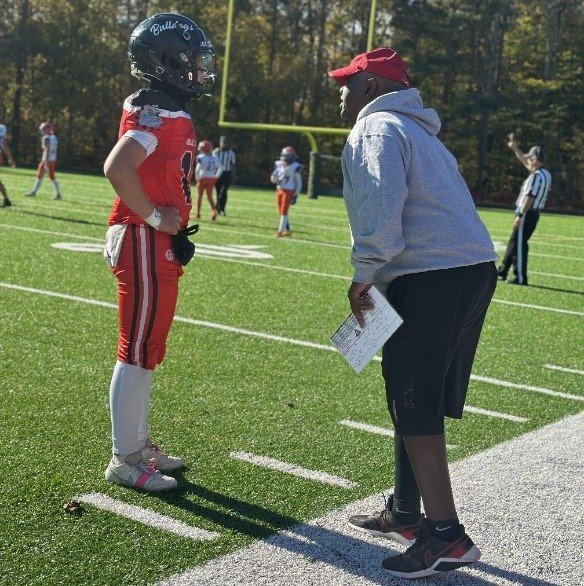
I am a middle school head coach, and I have been scrolling through social media for months, looking at sports-related posts.My conclusion is that there is an urgent need to bring sportsmanship and discipline back. Let me share my thoughts on three things: sportsmanship, discipline, and kindness.I believe as everyone does that athletes have the right to celebrate. But celebrations should not come at the expense of another person or your team. There is no need to antagonize your opponent after the game. The final score does that. It is important to make sure that our celebrations reflect well on our team, our school, our community, and our family.Discipline is the ability to manage your emotions and actions. For instance, years ago, I watched with dismay an ejected player attacking the game official. He obviously ignored that fact that his ejection was a consequence of his actions on the field. But that is only one example. I see parents attacking coaches, referees, and each other. I hear coaches and players using inappropriate language.Everyone must remember that there are consequences for our actions. Too many times, we get emotional and we act and then think. Discipline helps us think about our actions before carrying them out, weighing whether what we intend to do is right or wrong.The sports world also needs kindness. We see plenty of it: a player gives her jersey to a fan, a player gives the ball to a fan, athletes sign autographs, and athletes visit those less fortunate than themselves. If we are kind, the images I mention replace the inappropriate images and actions.Coaches must establish a great, competitive atmosphere. They should stress competing with commitment, losing with honor, and winning with dignity. Coaches should always consider the environment they are creating because the team is always watching!Athletes, at least initially, try to mimic the behavior and the culture of the coaching staff. If they see professional, appropriate behavior, they follow those actions. Similarly, if they see overly aggressive outward behavior, they follow those actions. This is their coping mechanism, especially if they have not formed their own sense of commitment, sportsmanship, and discipline.Several years ago, I was coaching at a high school and I watched an opposing coach berating the official for several minutes, and then one of his players started berating the official. I assure you; I am not perfect. For instance, I remember coaching a recreation league game many years ago and I thought the calls were horrible. I started to throw my hat on the field in anger, but one of my players caught my eye. He was WATCHING. He stared straight into my eyes. Fortunately, I did not throw the hat, and I swallowed whatever words I was going to say. It helped me to keep my wits about me.I keep that lesson with me every day. Sometimes coaches want a penalty to possibly get their team going, but even that can be done with style and respect. Many coaches in many sports at many levels do this, but the good ones know how to do it without disrespecting the official or the game. When I need an “energy” penalty for my team, I just walk too far out on the field during play and do not step back when told to do so. I get the penalty, I say it is not fair, and the players get new energy.I am grounded by my 3D Philosophy: DEDICATION, DETAIL, and DISCIPLINE.• Ded·i·ca·tion /dedəˈkāSH(ə)n/. Noun: the quality of being dedicated or committed to a task or purpose.• De·tail /dəˈtāl,ˈdētāl/. Noun: an individual feature, fact, or item.• Dis·ci·pline /ˈdisəplən/. Noun: to train or develop by instruction and exercise, especially in self-control.Simply, we must be DEDICATED to the task at hand, we must pay attention to the DETAIL of what we see and what we are taught, and we must have DISCIPLINE in all things: Family, Faith, School, Community, Work, and Sports.

We need to bring sportsmanship and discipline back Read More »

leadership development through communication

Leadership Development Through Communication and Emotional Intelligence: Motivationally Intelligent Leadership

I want to share thoughts on this using my book Motivationally Intelligent Leadership: Emerging Research and Opportunities. Leaders should begin and end with emotional intelligence (EI). The leader who follows this approach recognizes and employs their own emotions to effectively interact with their team. These principles are equally valuable for organizations working with renewable energy digital & social media PR teams or any strategic communications and public relations firm where communication excellence drives performance. Effective leaders can deliver value to each party involved in the process and can achieve buy-in through good information-sharing approaches. A motivationally intelligent leader also employs engaged interaction characterized by flexible, full-range communications to ensure that all parties listen, hear, and understand. True engagement comes when everyone continues to interact until management and team-building objectives are satisfied—a standard also emphasized in corporate communications agencies in Washington DC, brand reputation management consultancies, and thought leadership PR agencies in the USA. EI is a theory that organizations can use to determine the desired behaviors for success. It provides a basis to understand employees, because it is the ability to sense, understand, and effectively apply the power and acumen of emotions as a source of human energy, information, trust, creativity, and influence. Those who possess EI can effectively acknowledge and value feelings in themselves and in others and can respond to those feelings in an effective way. Paying attention to emotions can save the leader time by allowing him or her to direct energies more effectively and by expanding opportunities. This type of emotional awareness also benefits fields like digital marketing + public relations services, where communication strategy relies heavily on understanding audiences. EI has three driving forces: building trusting relationships, increasing energy and effectiveness, and creating the future. The bottom line is that EI requires that you know yourself and your emotions. It requires honest self-analysis and an ability to manage your emotions. In terms of those around you, it requires empathy. Empathy is important for leaders who pay attention to EI in the workplace. Ronald E. Wheeler, Director of the Fineman and Pappas Law Libraries at Boston University School of Law provides excellent insight on empathy. Many modern communication sectors, including battery storage and renewables PR companies, also depend on empathy to strengthen stakeholder engagement. “Simply put, empathy is the ability to understand and share the feelings of others. People lacking empathy might be self-centered, narcissistic, or even sociopathic. Empathy helps you to be a good collaborator because it allows you to better understand the effects that your actions have on others. It helps you to see things through the eyes of others and to anticipate the wants and needs of others in the workplace. It allows you to be a more compassionate and kinder human being. Moreover, it helps you to avoid misunderstanding others’ intentions (Wheeler 2016).” What we know about EI goes beyond empathy. A couple of studies are relevant to our examination. A group of researchers conducted a meta-analysis to understand how leaders’ EI relates to subordinates’ job satisfaction (Miao, Humphrey et al. 2016). EI can lead to job satisfaction, according to the findings of that study, which stated in part that emotionally savvy leaders tend to promote an emotionally intelligent organizational culture. The study contends that EI culture demonstrates a focus on good personnel development through training. In this environment, employees can deal well with negative feelings and enter nurturing interactions. Many audience targeting & message development agencies rely on this type of culture to craft resonant communication. This suggests that communication can improve in this EI-infused situation. Also in 2016, a study titled “Manager emotional intelligence and project success: The mediating role of job satisfaction and trust,” analyzed data from 373 managers in the Australian Defense industry (Rezvani, Chang et al.). The study results demonstrated that EI has a positive impact on project success, job satisfaction, and trust. EI managers are well-equipped to deal with negative emotions and stress in the workplace. They can control their emotions while working toward a productive outcome for all parties involved. This ability is also a major asset in M&A communications and crisis PR, where emotional intelligence stabilizes high-pressure situations. Controlled emotions allow the leader to think strategically. This strategic focus allows trust-building through lowering anxiety levels in the office, balancing the leader’s self-interest with that of team members, being open about mistakes and not placing blame, and being consistent. If, for instance, the focus is on finding solutions instead of placing blame, then team members can enjoy their jobs while performing at a prominent level. This approach is equally applicable in integrated marketing & PR for associations as well as media relations and stakeholder communications consultancies. Social networking focused on EI and empathy tends to improve employee engagement and productivity. The collaborative communications that result from EI-based practices lead to shared understanding and win-win outcomes for everyone. Two key predictors of problems are lack of open and honest communications and lack of accountability. If your team lacks collaborative communication or if there is an absence of accountability throughout the organization, Motivationally Intelligent Leadership can help. We also must examine the challenges of face-to-face versus online communication. Face-to-face interactions are two-way communications, which is not always the case with online interactions. Success requires a connection between the parties. In other words, the outcome should be a shared understanding of the intent of the communication. This can most effectively happen by restating the conclusion and agreeing that all parties understand the same outcome. According to the chart for online interactions, the idea forms quickly, the communication features short bursts of activity, and the sender must evaluate the meaning of any feedback received. That feedback is either immediate or missing based on the platform and the sender’s point of view. But the parties must exchange feedback to be successful. Just like in face-to-face communication, it is important to restate the conclusion and agree on the outcome. Here are tips to consider when determining your networking strategy:

Leadership Development Through Communication and Emotional Intelligence: Motivationally Intelligent Leadership Read More »

maximizing social networking

Maximizing Social Networking for Organizational Performance: Right Fit Leading

COURSE II: Leadership Solutions in a Hybrid Workplace Leadership thrives on a win-win collaborative culture that creates shared understanding. My book Right Fit Leading: Emotionally Intelligent Team Building teaches a process that maximizes training and, in turn, social networking. What sets the book apart from other approaches is its focus on building that shared understanding as the foundation for trust, accountability, and responsiveness. In today’s communication landscape, even organizations working with cleantech communications firms in Arlington VA and renewable energy PR specialists rely on these principles to strengthen internal alignment. The process emphasizes that effective leadership is about finding the right approach for the situation, the team, and the environment. By flexing style with adaptability, reflection, and trust, leaders build credibility and resilience across diverse contexts. Today’s leaders deal with hybrid work situations, a new paradigm where leaders succeed by combining flexibility, equity, and strong relationships across diverse work settings. These leaders blend flexibility, equity, and strong relationships to help teams thrive across diverse settings. This same adaptability is essential for teams supported by climate-tech media relations agencies, energy transition public affairs agencies, and other communication-driven sectors that must balance organizational goals with individual needs to build resilient and collaborative success. Organizations need collective agreements that guide teams. These agreements foster shared understanding, collaboration, and innovation. Those who build these agreements are creating a foundation for effective teams. It is important to develop adaptable approaches to leadership for diverse organizational needs. Leaders must also identify and refine a personal leadership style through self-assessment, an emotional intelligence principle. Assess your emotions and the emotions of others in search of accountability and responsiveness to worker needs and organizational goals. This is true whether leading traditional business teams or those within sustainability communications consultancies in the USA or corporate communications units in the clean energy sector. The Right Fit Leading Process is a practical, emotionally intelligent framework that develops leaders and teams together, moving beyond the outdated view of leadership as a one-person exercise. It avoids the traditional approach of training the leader and team members separately. In this approach, leaders and team members should return to their team and share what they have learned. However, this does not always happen. It may be too busy to go over this information, the leader may not find the time to debrief, or the team members do not have a venue to share their thoughts. This is no one’s fault, but it represents lost opportunities to share data—something that organizations in fast-paced fields, including companies guided by cleantech thought leadership agencies, cannot afford. The Right Fit Leading Process trains the whole team together. During the training, work to develop, discuss, and refine shared understanding. Participants can even find win-win situations through collaboration during the training. This kind of training delivers principle-driven, emotionally intelligent leadership that strengthens leaders and teams. The process is based on 3D: Dedication, Detail, and Discipline. This approach fosters trust, communication, and accountability. It also aligns personal and organizational goals through coaching, mentoring, and real-world responsiveness. Dedication requires that you commit to the task at hand and to your responsibility. Pay attention to the Detail in the teaching and training we receive. Use Discipline to always follow the rules in all situations. Trust is a Gift Leaders and teams rely on trust. Leadership development for teams must start with an understanding of trust. Trust is a gift that someone gives you. Trust grows from effective relationships characterized by role definition, shared understanding, and emotional intelligence. Once team roles and responsibility are defined, ensure that you train people for various roles based on current and future needs and plans. Leaders are responsible for training and preparation of their team for the changing nature of the world of work. Leaders should ensure that they conduct collaborative operations and training. Teams can reap the benefits of setting their goals to motivate high-level achievements. A focus on need satisfaction and on creating positive energy is good for personal and team motivation. When we take care of people and there is shared understanding, we should get other benefits from the team dynamic, like exhibiting ethical and moral behavior and connecting with people in meaningful relationships. A collaborative environment with open lines of communication and valuable feedback builds trust that makes a team more effective. The team may be more productive based on shared understanding. The discussion of intelligence, emotional and/or motivational, is about each person working to understand their own emotions, the emotions of others, and about trying to adjust based on the interplay of each. In this way, we can identify and employ the value that is available to all parties to an interaction and come out of it with total buy-in. Engaged interaction means that we must listen, hear, and understand in full-range communications based on a mutual agreement to continue communicating until you get it right. Now the team can grow with fair-minded, motivated participants who listen to ideas, not just words. Right Fit Communications LLC provides courses that can help leaders grasp EI and empathetic concepts. Check out our store. Check out these emotional intelligence examples:https://www.mastersinminds.com/case-study.-leaders-with-high-emotional-intelligence—blog-1https://www.rochemartin.com/resources/case-studieshttps://digitalcommons.lindenwood.edu/cgi/viewcontent.cgi?article=1365&context=dissertations

Maximizing Social Networking for Organizational Performance: Right Fit Leading Read More »

virginia public relations firm richmond public relations agency

Public Relations in the Digital Age: How to Build a Strong Reputation Online

You have a reputation in the digital age whether you realize it or not. You can let others define you, or you can take control of your online reputation — a philosophy shared by many modern firms, from a crisis communications consultant Virginia businesses rely on to a content marketing and PR agency Richmond companies trust. I call this your voice. It is important that you use your voice to share your views and motivations. You must decide what is best for your situation — but do not let anyone suppress your voice. You may be helping someone else find theirs. Someone may lack confidence to create or share content, or they may find motivation in the way you tell your story. You never know who you might influence. Influencing, monitoring, and maintaining public perception is known as online reputation management (ORM). Whether handled individually or through a corporate communications firm Virginia organizations depend on, ORM includes creating content, managing reviews, monitoring social media, and improving search engine visibility. A strong ORM strategy helps you nurture a favorable online presence and minimize negative impacts — something even a Richmond VA digital PR agency focuses on daily. ORM is about controlling the narrative and building trust.(https://sproutsocial.com/insights/online-reputation-management/#:~:text=for%20your%20business-,What%20is%20online%20reputation%20management?,that%20paints%20a%20favorable%20picture.) Key Principles of Online Reputation Management 1. Monitor and Listen:Track brand mentions, reviews, social platforms, and search results in real time. Many public affairs agency Virginia teams start exactly here. 2. Respond Promptly and Professionally:Engage with all feedback — positive and negative. Professional responsiveness is a major part of Richmond communications consulting services offered by top firms. 3. Amplify Positive Content:Request positive reviews and publish high-quality blogs or videos to build authority and push negative content lower. 4. Transparency and Authenticity:Share behind-the-scenes insights, be honest, and show your human side. 5. Strategic Content Creation:Create helpful, consistent content reflecting your values. High-quality content is often a focus area for a clean energy public relations agency working to educate audiences on complex topics. 6. SEO Integration:Strengthen visibility for positive content and suppress outdated or negative mentions. 7. Crisis Management:Prepare a strategy to quickly address misinformation. Many businesses rely on a crisis communications consultant Virginia for this reason alone. Storytelling is Key Tell your story often. Share your wins and future plans. Talk about your interactions with partners and clients. Use data to craft relatable stories that build trust and long-term loyalty. Effective storytelling builds emotional connections and makes your message memorable. It enhances credibility and strengthens your digital presence — a method used by nearly every reputable content marketing and PR agency Richmond offers. Pick Your Battles This is a critical skill. You do not need to respond to everything — but you should amplify the positive and correct the negative when needed. Negative content loses power when truth and transparency lead the way. Plan Your Destination Effective communication planning is essential for strategic management. Begin by analyzing your or your client’s needs and build a plan grounded in research and clear objectives. Even a top-tier strategic communications agency Richmond follows a structured model like RACE: The RACE Model This model guides decision-making, identifies key audiences, and strengthens overall PR strategies. Measure, Measure, Measure Avignyata Inc. highlights the “5×3 Social Media Strategy,” inspired by the 5-5-5 rule. This balanced approach ensures consistent engagement, community building, and long-term audience value. The key lies in analyzing your operations, measuring outcomes, and adjusting your ORM strategy regularly. Whether you work independently or with a Richmond VA digital PR agency, measurement drives improvement. Maximizing Social Networking for Organizational Performance ✔ Connection Between Communication Skills and LeadershipStrong communicators make strong leaders. Effective interaction builds influence, trust, and organizational alignment. ✔ Emotional Intelligence in Leadership DevelopmentLeaders with high EQ build stronger teams, resolve conflict better, and maintain higher engagement. ✔ Coaching Techniques for Improved PerformanceEmpathetic coaching enhances team motivation and productivity. It also supports personal and professional growth. ✔ Real Examples and Case StudiesOrganizations that integrate communication, emotional intelligence, and strategic storytelling show measurable performance improvements.

Public Relations in the Digital Age: How to Build a Strong Reputation Online Read More »

1 2 (1)

Right Fit Leading: Great Leadership in Action

The other day I went to lunch and was captivated to see great leadership in action. I was at a Chik-Fil-A and I watched the managers and the team members work seamlessly in support of every customer. The managers were active, alert, and involved. The team members were enthusiastic and shared information freely with managers and with other members. This team was impressive! If you need help building your team, here are a couple of discounted book suggestions for you. Right Fit Leading: Emotionally Intelligent Team Building 3D COACHING: Suggestions for a New Approach

Right Fit Leading: Great Leadership in Action Read More »

whole logo jpeg

Sharing My 3D Philosophy

My 3D philosophy is dedicated to all the motivated girls and boys I had the pleasure to coach over the years. It was shaped with the help of all those Air Force people with whom I shared the sacrifice of serving the nation. I hope it helps you. Dedication requires that you commit to the task at hand and to your responsibility. Pay attention to the Detail in the teaching and training we receive. Use Discipline to always follow the rules in all situations. READ MORE

Sharing My 3D Philosophy Read More »

image

RFL: New book and interactive process highlight development of leaders and teams

The details are spelled out in my new book, The Right Fit Leading Process: EI-Based Team Building. I have developed an interactive process for training and developing teams that allows leaders and those they lead to work together in the same session or venue. In practice, it starts with an interactive discussion of emotional intelligence basics, then the process, then we use vignettes to apply what they have learned. Please contact me if you want to know more. Note: RFL is Right Fit Leading, our approach to the leader and member development journey.

RFL: New book and interactive process highlight development of leaders and teams Read More »

38

The RFL Process: Achieve Shared Understanding

Teaching emotional intelligence and leadership skills should be a two-way exchange of ideas and theories to achieve shared understanding. An example is my second presentation at the University of Connecticut at Hartford in June. This presentation continues my focus on The Right Fit Leading Process and win-win outcomes. Using The RFL Process is valuable because educators, and leaders, should value relationships that create and nurture shared understanding. The RFL Process provides a method to handle leader and team development in any situation through sound principles of philosophy, inspiration, and motivation. Emotional Intelligence (EI) is important in all these activities. Leaders and teams must work together to handle interpersonal or work relationships with fairness and good judgment. My sessions also touch on empathy, team cohesion, and situational leadership including Leader Member Exchange (LMX) Theory. Focusing on these constructs creates participative discussions in sessions that allow me to delve into case studies and real-life situations with equal enthusiasm. Please let me know if you want my help with this kind of training and development.

The RFL Process: Achieve Shared Understanding Read More »

35542 1 1

Executive Leadership Session

I enjoyed today\’s great session with the energetic students at the University of Connecticut at Hartford\’s Executive Leadership Course. During our session, we discussed The Right Fit Leading Process, building emotionally-intelligent teams, creating relationships, and achieving shared understanding. We then progressed to analyzing case studies to closely examine trust in terms of how it is developed and nurtured. I want to thank Dr. Mohamad Alkadry, director of the UCONN School of Public Policy, for this opportunity to engage.

Executive Leadership Session Read More »

0