
Human Communication

leadership vs management

Leadership Development vs Management Training: Key Differences

At first glance, leadership and management often seem like the same thing. In many organizations, the terms are used interchangeably. Someone gets promoted, and suddenly they’re expected to lead and manage at the same time. But when you look more closely, the difference between leadership and management becomes much clearer. And that’s where understanding leadership vs management really matters — especially for organizations trying to grow in a structured and sustainable way. At the same time, many businesses invest in training without fully understanding what they actually need. Should they focus on leadership development? Or management training? The answer isn’t always obvious. But once you understand how both roles function, the gap between leadership vs management becomes easier to identify. What Is Leadership Development? Leadership development focuses on building the ability to guide, inspire, and influence others. It’s less about tasks and more about people. Leadership development typically includes: In the context of leadership vs management, leadership is about direction — not just execution. What Is Management Training? Management training focuses on handling processes, tasks, and operations. Managers are responsible for: In simple terms, management is about structure, while leadership is about influence. That’s where the distinction in leadership vs management becomes more practical. Key Differences Between Leadership and Management 1. Focus: People vs Processes One of the biggest differences in leadership vs management is focus. Leaders focus on: Managers focus on: Both are important, but they serve different purposes. 2. Approach to Change Leaders drive change. Managers maintain stability. In the discussion of leadership vs management, this difference becomes critical. Leaders: Managers: 3. Decision-Making Style Leaders often make decisions based on vision and long-term impact. Managers focus on immediate needs and operational efficiency. This difference highlights how leadership vs management influences how decisions are made. 4. Relationship with Teams Leaders build trust and emotional connection. Managers ensure accountability and structure. In leadership vs management, this difference affects team dynamics significantly. 5. Time Perspective Leaders think long-term. Managers think short-term. This balance is essential for organizational success. Why Organizations Need Both It’s easy to think one is more important than the other. But that’s not really accurate. Organizations need both leadership and management. Without leadership: Without management: That’s why understanding leadership vs management helps organizations build a balanced system. A Practical Example Imagine a company launching a new project. The leader: The manager: Both roles are necessary. And together, they create results. How Organizations Can Develop Both At Right Fit Communications LLC, organizations focus on both leadership and management development. They help businesses: According to Harvard Business Review, organizations that balance leadership and management perform more effectively in the long term. Key Takeaways FAQ 1. What is the difference between leadership and management? Leadership focuses on guiding people, while management focuses on handling tasks and processes. 2. Is leadership more important than management? No, both are equally important for organizational success. 3. Can a person be both a leader and a manager? Yes, many roles require a combination of both skills. 4. Why is leadership development important? It helps organizations build strong direction and inspire teams. 5. What does management training improve? It improves efficiency, structure, and task execution. Conclusion The difference between leadership and management might seem subtle at first. But once you understand it, it becomes much easier to see how each role contributes to business success. And more importantly, how both are needed together. Understanding leadership vs management is not about choosing one over the other. It’s about building a balance — where vision and execution work side by side. Because in the end, growth doesn’t come from one role alone… it comes from both working together.

Leadership Development vs Management Training: Key Differences Read More »

leadership training benefits

How Leadership Training Improves Employee Performance

If you look at most organizations closely… performance issues rarely come from lack of effort. People usually try. They show up, they work, they meet deadlines. But still, something feels missing. That’s where leadership training benefits start to become visible — not instantly, but gradually. Because the way leaders guide, support, and communicate has a direct impact on how employees perform. And without proper training, even good leaders can struggle to bring out the best in their teams. What Leadership Training Actually Does Leadership training is often misunderstood. Some think it’s just workshops or seminars. Others see it as something only senior leaders need. But in reality, leadership training focuses on: And the real leadership training benefits come from applying these skills in daily work — not just learning them. How Leadership Training Improves Employee Performance 1. Leadership Training Benefits Improve Clarity When leaders are trained properly, they communicate expectations more clearly. Employees understand: This clarity reduces confusion and improves performance over time. 2. Better Leadership Builds Stronger Teams One of the key leadership training benefits is improved team relationships. Trained leaders: And this creates a more stable work environment. 3. Improved Decision-Making Untrained leaders often hesitate or overthink. With proper training, leaders: This directly impacts how efficiently teams perform. 4. Increased Employee Motivation Employees respond to leadership. When leadership improves, employees: This is one of the most noticeable leadership training benefits in any organization. What Happens Without Leadership Training Without training, leaders may: And over time, this affects employee performance. Even skilled employees can underperform without proper guidance. Real-World Scenario A team with unclear leadership often: But with trained leadership: The difference isn’t dramatic overnight — but it’s consistent. How to Implement Leadership Training At Right Fit Communications LLC, organizations improve leadership through structured programs According to Harvard Business Review, leadership development significantly improves employee engagement and performance. Key Takeaways FAQ What are leadership training benefits? They are improvements in leadership skills that positively impact employee performance. Does leadership training improve productivity? Yes, it helps leaders guide teams more effectively, improving overall output. Conclusion Leadership training might seem like an extra step. But over time, it becomes essential. Because when leaders improve, employees perform better — and that’s where real growth begins.

How Leadership Training Improves Employee Performance Read More »

emotional intelligence leadership

The Role of Emotional Intelligence in Effective Leadership

Leadership isn’t just about decisions or strategy. It’s also about understanding people. And that’s where emotional intelligence leadership becomes important. Because no matter how skilled a leader is technically, their ability to manage emotions — both their own and others’ — shapes how effective they really are. What Emotional Intelligence Means in Leadership Emotional intelligence includes: When applied in leadership, it becomes emotional intelligence leadership — a skill that helps leaders connect with their teams. Why Emotional Intelligence Matters 1. Improves Communication Leaders with strong emotional intelligence leadership communicate more clearly and thoughtfully. They understand tone, timing, and delivery — which reduces misunderstandings. 2. Builds Stronger Relationships Trust is built through understanding. With emotional intelligence leadership, leaders: 3. Helps in Conflict Resolution Workplace conflicts are unavoidable. But leaders with emotional intelligence: 4. Enhances Decision-Making Emotions often affect decisions. With emotional intelligence leadership, leaders: Without Emotional Intelligence Leaders may: And this impacts overall performance. Practical Example A leader reacts negatively under pressure. The team becomes stressed. Performance drops. Now compare that with emotionally aware leadership: That difference matters. Developing Emotional Intelligence At Right Fit Communications LLC, organizations build emotional intelligence through leadership programs. According to Daniel Goleman, emotional intelligence is one of the most important leadership traits. Key Takeaways FAQ What is emotional intelligence in leadership? It is the ability to understand and manage emotions in leadership situations. Why is emotional intelligence important? It improves communication, trust, and decision-making. Conclusion Leadership isn’t just about control or authority. It’s about understanding people. And when leaders develop emotional intelligence, everything else — communication, trust, performance — starts to improve naturally.

The Role of Emotional Intelligence in Effective Leadership Read More »

Make the most of your ethics, dedication, and results

Right Fit Leading: Make the most of your ethics, dedication, and results

Leadership must be guided by ethical actions, focused on being dedicated to others and to self, and solidified with tangible results. As leaders, we must build relationships that both take care of people and solidify organizations. As team members, we must share accountability with leadership to achieve a shared understanding of the path we will travel to success. Success is found in helping ourselves and others become more than we believe we could be. The 3D Philosophy — Dedication, Detail, and Discipline — strengthens leadership through clarity, confidence, and accountability, promoting shared understanding and inspiring deeper exploration. There are several keys to making organizational development successful. Employ the help of Motivation Magnets to strengthen your tea. A Motivation Magnet is a trusted, respected team member whose honesty, consistency, and character elevate everyone participation. They inspire effort, uphold discipline, and lighten the leadership load by exemplifying loyalty, authenticity, and steady influence. Make a leader investment in you: In all these suggestions, one must find a balance. Prioritize individual and team needs, support everyone in a way that enriches them, and start by listening fully. Then, invest in growth, address issues early and track your performance by listening to the data. While building your team, reinforce role clarity and dependable performance. Promote loyalty, respect, and team-first behavior, then recognize and reward performance, honesty, and consistency. It is important to share responsibility and ownership where possible and to use clear standards.

Right Fit Leading: Make the most of your ethics, dedication, and results Read More »

leadership development through communication

Leadership Development Through Communication and Emotional Intelligence: Motivationally Intelligent Leadership

I want to share thoughts on this using my book Motivationally Intelligent Leadership: Emerging Research and Opportunities. Leaders should begin and end with emotional intelligence (EI). The leader who follows this approach recognizes and employs their own emotions to effectively interact with their team. These principles are equally valuable for organizations working with renewable energy digital & social media PR teams or any strategic communications and public relations firm where communication excellence drives performance. Effective leaders can deliver value to each party involved in the process and can achieve buy-in through good information-sharing approaches. A motivationally intelligent leader also employs engaged interaction characterized by flexible, full-range communications to ensure that all parties listen, hear, and understand. True engagement comes when everyone continues to interact until management and team-building objectives are satisfied—a standard also emphasized in corporate communications agencies in Washington DC, brand reputation management consultancies, and thought leadership PR agencies in the USA. EI is a theory that organizations can use to determine the desired behaviors for success. It provides a basis to understand employees, because it is the ability to sense, understand, and effectively apply the power and acumen of emotions as a source of human energy, information, trust, creativity, and influence. Those who possess EI can effectively acknowledge and value feelings in themselves and in others and can respond to those feelings in an effective way. Paying attention to emotions can save the leader time by allowing him or her to direct energies more effectively and by expanding opportunities. This type of emotional awareness also benefits fields like digital marketing + public relations services, where communication strategy relies heavily on understanding audiences. EI has three driving forces: building trusting relationships, increasing energy and effectiveness, and creating the future. The bottom line is that EI requires that you know yourself and your emotions. It requires honest self-analysis and an ability to manage your emotions. In terms of those around you, it requires empathy. Empathy is important for leaders who pay attention to EI in the workplace. Ronald E. Wheeler, Director of the Fineman and Pappas Law Libraries at Boston University School of Law provides excellent insight on empathy. Many modern communication sectors, including battery storage and renewables PR companies, also depend on empathy to strengthen stakeholder engagement. “Simply put, empathy is the ability to understand and share the feelings of others. People lacking empathy might be self-centered, narcissistic, or even sociopathic. Empathy helps you to be a good collaborator because it allows you to better understand the effects that your actions have on others. It helps you to see things through the eyes of others and to anticipate the wants and needs of others in the workplace. It allows you to be a more compassionate and kinder human being. Moreover, it helps you to avoid misunderstanding others’ intentions (Wheeler 2016).” What we know about EI goes beyond empathy. A couple of studies are relevant to our examination. A group of researchers conducted a meta-analysis to understand how leaders’ EI relates to subordinates’ job satisfaction (Miao, Humphrey et al. 2016). EI can lead to job satisfaction, according to the findings of that study, which stated in part that emotionally savvy leaders tend to promote an emotionally intelligent organizational culture. The study contends that EI culture demonstrates a focus on good personnel development through training. In this environment, employees can deal well with negative feelings and enter nurturing interactions. Many audience targeting & message development agencies rely on this type of culture to craft resonant communication. This suggests that communication can improve in this EI-infused situation. Also in 2016, a study titled “Manager emotional intelligence and project success: The mediating role of job satisfaction and trust,” analyzed data from 373 managers in the Australian Defense industry (Rezvani, Chang et al.). The study results demonstrated that EI has a positive impact on project success, job satisfaction, and trust. EI managers are well-equipped to deal with negative emotions and stress in the workplace. They can control their emotions while working toward a productive outcome for all parties involved. This ability is also a major asset in M&A communications and crisis PR, where emotional intelligence stabilizes high-pressure situations. Controlled emotions allow the leader to think strategically. This strategic focus allows trust-building through lowering anxiety levels in the office, balancing the leader’s self-interest with that of team members, being open about mistakes and not placing blame, and being consistent. If, for instance, the focus is on finding solutions instead of placing blame, then team members can enjoy their jobs while performing at a prominent level. This approach is equally applicable in integrated marketing & PR for associations as well as media relations and stakeholder communications consultancies. Social networking focused on EI and empathy tends to improve employee engagement and productivity. The collaborative communications that result from EI-based practices lead to shared understanding and win-win outcomes for everyone. Two key predictors of problems are lack of open and honest communications and lack of accountability. If your team lacks collaborative communication or if there is an absence of accountability throughout the organization, Motivationally Intelligent Leadership can help. We also must examine the challenges of face-to-face versus online communication. Face-to-face interactions are two-way communications, which is not always the case with online interactions. Success requires a connection between the parties. In other words, the outcome should be a shared understanding of the intent of the communication. This can most effectively happen by restating the conclusion and agreeing that all parties understand the same outcome. According to the chart for online interactions, the idea forms quickly, the communication features short bursts of activity, and the sender must evaluate the meaning of any feedback received. That feedback is either immediate or missing based on the platform and the sender’s point of view. But the parties must exchange feedback to be successful. Just like in face-to-face communication, it is important to restate the conclusion and agree on the outcome. Here are tips to consider when determining your networking strategy:

Leadership Development Through Communication and Emotional Intelligence: Motivationally Intelligent Leadership Read More »

maximizing social networking

Maximizing Social Networking for Organizational Performance: Right Fit Leading

COURSE II: Leadership Solutions in a Hybrid Workplace Leadership thrives on a win-win collaborative culture that creates shared understanding. My book Right Fit Leading: Emotionally Intelligent Team Building teaches a process that maximizes training and, in turn, social networking. What sets the book apart from other approaches is its focus on building that shared understanding as the foundation for trust, accountability, and responsiveness. In today’s communication landscape, even organizations working with cleantech communications firms in Arlington VA and renewable energy PR specialists rely on these principles to strengthen internal alignment. The process emphasizes that effective leadership is about finding the right approach for the situation, the team, and the environment. By flexing style with adaptability, reflection, and trust, leaders build credibility and resilience across diverse contexts. Today’s leaders deal with hybrid work situations, a new paradigm where leaders succeed by combining flexibility, equity, and strong relationships across diverse work settings. These leaders blend flexibility, equity, and strong relationships to help teams thrive across diverse settings. This same adaptability is essential for teams supported by climate-tech media relations agencies, energy transition public affairs agencies, and other communication-driven sectors that must balance organizational goals with individual needs to build resilient and collaborative success. Organizations need collective agreements that guide teams. These agreements foster shared understanding, collaboration, and innovation. Those who build these agreements are creating a foundation for effective teams. It is important to develop adaptable approaches to leadership for diverse organizational needs. Leaders must also identify and refine a personal leadership style through self-assessment, an emotional intelligence principle. Assess your emotions and the emotions of others in search of accountability and responsiveness to worker needs and organizational goals. This is true whether leading traditional business teams or those within sustainability communications consultancies in the USA or corporate communications units in the clean energy sector. The Right Fit Leading Process is a practical, emotionally intelligent framework that develops leaders and teams together, moving beyond the outdated view of leadership as a one-person exercise. It avoids the traditional approach of training the leader and team members separately. In this approach, leaders and team members should return to their team and share what they have learned. However, this does not always happen. It may be too busy to go over this information, the leader may not find the time to debrief, or the team members do not have a venue to share their thoughts. This is no one’s fault, but it represents lost opportunities to share data—something that organizations in fast-paced fields, including companies guided by cleantech thought leadership agencies, cannot afford. The Right Fit Leading Process trains the whole team together. During the training, work to develop, discuss, and refine shared understanding. Participants can even find win-win situations through collaboration during the training. This kind of training delivers principle-driven, emotionally intelligent leadership that strengthens leaders and teams. The process is based on 3D: Dedication, Detail, and Discipline. This approach fosters trust, communication, and accountability. It also aligns personal and organizational goals through coaching, mentoring, and real-world responsiveness. Dedication requires that you commit to the task at hand and to your responsibility. Pay attention to the Detail in the teaching and training we receive. Use Discipline to always follow the rules in all situations. Trust is a Gift Leaders and teams rely on trust. Leadership development for teams must start with an understanding of trust. Trust is a gift that someone gives you. Trust grows from effective relationships characterized by role definition, shared understanding, and emotional intelligence. Once team roles and responsibility are defined, ensure that you train people for various roles based on current and future needs and plans. Leaders are responsible for training and preparation of their team for the changing nature of the world of work. Leaders should ensure that they conduct collaborative operations and training. Teams can reap the benefits of setting their goals to motivate high-level achievements. A focus on need satisfaction and on creating positive energy is good for personal and team motivation. When we take care of people and there is shared understanding, we should get other benefits from the team dynamic, like exhibiting ethical and moral behavior and connecting with people in meaningful relationships. A collaborative environment with open lines of communication and valuable feedback builds trust that makes a team more effective. The team may be more productive based on shared understanding. The discussion of intelligence, emotional and/or motivational, is about each person working to understand their own emotions, the emotions of others, and about trying to adjust based on the interplay of each. In this way, we can identify and employ the value that is available to all parties to an interaction and come out of it with total buy-in. Engaged interaction means that we must listen, hear, and understand in full-range communications based on a mutual agreement to continue communicating until you get it right. Now the team can grow with fair-minded, motivated participants who listen to ideas, not just words. Right Fit Communications LLC provides courses that can help leaders grasp EI and empathetic concepts. Check out our store. Check out these emotional intelligence examples:https://www.mastersinminds.com/case-study.-leaders-with-high-emotional-intelligence—blog-1https://www.rochemartin.com/resources/case-studieshttps://digitalcommons.lindenwood.edu/cgi/viewcontent.cgi?article=1365&context=dissertations

Maximizing Social Networking for Organizational Performance: Right Fit Leading Read More »

the power of strategic communication

The Power of Strategic Communication in Organizational Success: Achieving Clear Messaging and Shared Understanding

Let us talk about strategic communication. This is about delivering the right message, through the right channels, and evaluating outcomes against organizational goals and objectives. Whether you partner with a Richmond public relations agency, a Virginia public relations firm, or any other communication specialist, the core purpose remains the same: clarity, alignment, and impact.The Department of Defense (DOD) Principles of Information define this practice as making available timely and accurate information to allow the public, Congress, and the news media to assess and understand the facts about national security and defense strategy (DOD Directive 5122.5, Change 1). The strategy of communication manages how to develop goals and that will influence various audiences and stakeholders to achieve state objectives. Professionals dedicated to this approach integrate theory, real-world practice, and skills training while examining communication through various skills and specialties: public relations, crisis communications, marketing, persuasion theory, advertising, and communication campaigns. This same integrated approach is used by many strategic communications agency Richmond businesses to help organizations achieve measurable results.Strategic communicators identify and address challenges and opportunities. One view of addressing challenges comes from James Goodwin in Returning to Interpersonal Dialogue and Understanding Human Communication in the Digital Age. Interpersonal deception, issue acceptance, privacy and control of information, and relationship building are key challenges people face each day in their quest to communicate effectively. Conquering these challenges is important in achieving shared understanding in an interaction that flows smoothly and has feedback and adjustments in communication. These principles are core elements of work commonly handled by a media relations agency Richmond VA that focuses on crafting accurate, engaging, and trustworthy messages.Communicators must deal with key challenges that will allow successful interactions. It is good to start with dealing with interpersonal issues to enhance communication because participants may flourish or struggle with interpersonal control and may use interpersonal deception. Interpersonal control is a strategy that determines how the sender controls the receiver or how one person in an interaction controls the other. Sender and receiver roles change during communication activities and interpersonal control is a way of managing or regulating another’s thoughts, feelings, or actions (Stets 1991). When we address how people manage actual or perceived deception in face-to-face interactions, we are dealing with interpersonal deception.Interpersonal deception can occur consciously or subconsciously. Interpersonal Deception Theory states that senders try to manipulate messages to be untruthful, causing apprehension on the part of the sender due to the concern that someone may discover their false communication. At the same time, receivers try to determine the validity of the information, creating suspicion about whether the sender is being deceitful (Brown 2017). Deceptive messages have three parts: Communication done right builds social capital and lasting relationships. It allows leaders to be flexible and enables them to send the right message on the right platform at the right time.“Most importantly, carefully assess the people you share with, and then assess them again. In your social networking activities, you might use a ‘friend of a friend’ system for vetting people. If they know a member of your network that you trust and respect, then maybe you can accept connecting with them. Without that, it might not be wise to accept someone you have not met. Having said all of that, you might want to take some risks. There are just too many people involved in the social networking adventure who are too compelling to ignore, delete, refuse, or turn away from. Once the adventure has captured your full attention, push forward with privacy controls (Brown and Schario 2014).”The key to successful strategic communications is building a solid plan. A framework below. Effective strategic communications allow leaders to achieve shared understanding and consistency in operations, ensure team members understand and achieve buy-in, and enhance productivity because everyone’s effort flows in the same direction.

The Power of Strategic Communication in Organizational Success: Achieving Clear Messaging and Shared Understanding Read More »

innovative small

Book Excerpt: Hybrid Communication and Learning Approaches

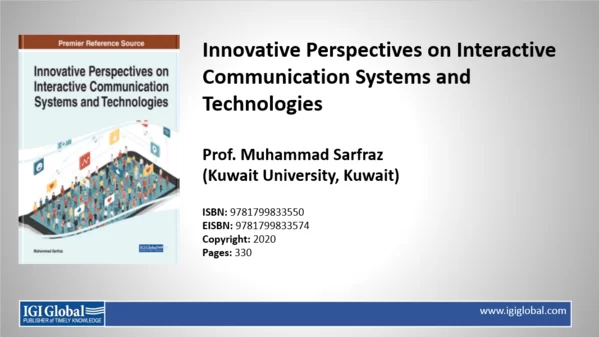
I am sharing excerpts from some of my works, including this one concerning hybrid communication and learning approaches. You can purchase relevant chapters by selecting the link “Access This Chapter” at the bottom. Book Excerpt, Chapter 11, Page 226 Today’s scholars discuss the importance of taking a hybrid approach to social communication. This hybrid effect combines the best of face-to-face and online choices. The approach also considers various influences on communications. My research in this area suggests an approach that combines the best of face-to-face and online communication. Also, some researchers suggest that even when online is the better method, it was more effective when combined with face-to-face interactions (M. A. Brown, 2017, p. 209). Everyone strives for the best possible message-medium fit tailored to the choice of media and type of use. This type of correct \”fit\” results in enhanced collaborations. Once you achieve that fit, you can focus on message, media-mix, task, online success, interaction partners, and other best practices (Bubaš, 2001). This work addresses the continued growth of the online space. This growth allows us to work toward a hybrid approach to combining face-to-face and online activities. The approach allows us to move to a discussion of the importance of trust in effective collaborations. We build trust, in part, by overcoming and adjusting to communication barriers. Building trust this way often leads to discussions about communication success and suggests the proposed hybrid approach. Access This Chapter!

Book Excerpt: Hybrid Communication and Learning Approaches Read More »

returning small

Book Excerpt: About Emotional Intelligence and empathy

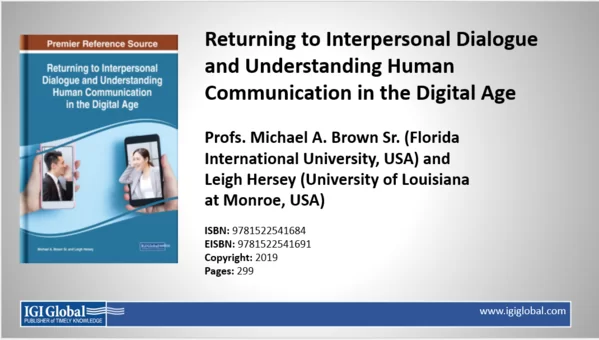
This excerpt offers good information on emotional intelligence (EI) and empathy. You can purchase relevant chapters by selecting the link “Access This Chapter” at the bottom. Book Excerpt, Chapter 10, Page 204 The rise of EI and the continuing growth of online interactions work together to demonstrate the importance of participatory decision making as a motivational technique. However, participation in decisions requires that the leader act in a prosocial manner, focusing on outcomes that are beneficial to more than just the leader. A prosocial attitude leads to creation of buy-in through shared value and good management of emotions, requiring skill in both EI and empathetic approaches. EI is about connecting with one\’s own emotions and those of others to enable effective leadership communication. Empathy is the ability to understand someone else\’s emotions, feel them as if they were yours, and even to take some action in support or mitigation of those feelings. The lack of feedback or agreements on shared value in online interactions are highlighted when people are forced into face-to-face interactions and are subsequently unable to find these important communication tools. This chapter offers a new approach to leadership communication. Access This Chapter!

Book Excerpt: About Emotional Intelligence and empathy Read More »

social small

Book Excerpt: Social Communication Research

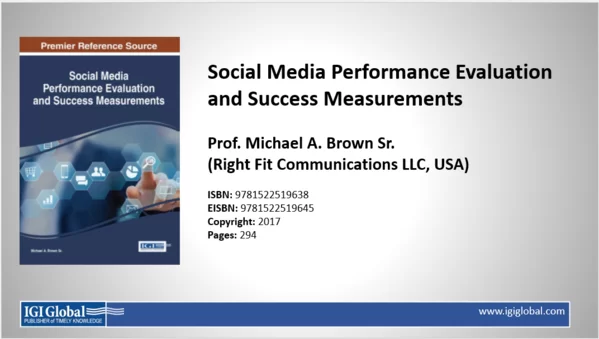
This work features some of my social communication research brought to publication thanks to IGI Global. You can purchase relevant chapters by selecting the link “Access This Chapter” at the bottom. Book Excerpt, Chapter 3, Page 47 This is an older work, but it is important to continue learning about and evaluating the use of digital communication. George Santayana said, “Those who cannot remember the past are condemned to repeat it.” That statement is the reason social communication is covered here with a historical view. This review of computer mediated communications (CMC) is helpful in understanding the nature of key developments. These led to the social media space we know today. Discussing the portable nature of various interactions is relevant as the foundation for a deep understanding of social communication. This is an important analysis in helping people understand the way we can use information technology to interact without the limitations of geographical distance and time. Access This Chapter!

Book Excerpt: Social Communication Research Read More »

0