
Right Fit Leading

leader member development overview wheel small (1)

The Right Fit Leading Process

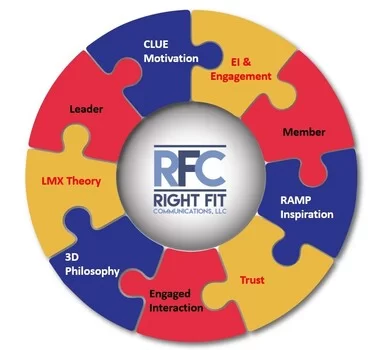
The Right Fit Leading Process is not new. What is new is the way that new research in the areas of emotional intelligence, empathy, trust, team development. That means a host of other leadership considerations have come together for me. It is now clearer than ever that the way to build successful organizations is to develop leaders and members together and let them engage to find shared understanding. It is no longer enough to develop leaders. We must build teams where leaders and those they lead partner in developing philosophy, inspiration, and motivation. The Right Fit Leading Process has as its foundation emotional intelligence and empathy. These are collaboratively developed for the leader and the member or follower. We use engaged interaction to develop leaders and members at the same time through collaborative training methods. The basics of our focus always include EI and engagement, LMX Theory, and trust. The process focuses on a consistent philosophy of the way we lead and follow. The process suggests that all members of the organization have a responsibility to inspire themselves and others. That means the organization needs work relationships where people at all levels motivate themselves and others to take on challenges that they might not attempt otherwise. The process can help leaders and those they lead in diverse types of organizations and industries. The process can develop teams, leaders, and members, promoting trust, engagement, and other benefits that can lead to success and growth. Please contact me if you want to know more about the Right Fit Leading Process.   NOTE: Graphic courtesy of Hafsa Akhter, SA Digitech

The Right Fit Leading Process Read More »

rfl process

Right Fit Leading: Philosophy, Inspiration, and Motivation

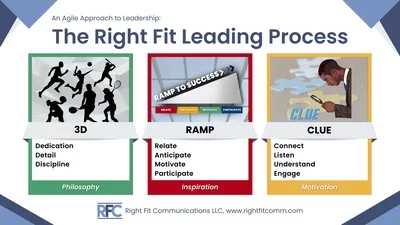
Dr. Brown’s research and engagements support the belief that good leadership is about philosophy, inspiration, and motivation. The Right Fit Leading Process is based on emotional intelligence and empathy for the leader and the member or follower. The process focuses on a consistent philosophy of the way we lead and follow. It suggests that we must inspire ourselves and others. Finally, it recommends that we motivate ourselves and others to take on challenges that we might not attempt otherwise. The process can help leaders and those they lead in diverse types of organizations and industries. The process is complementary to trust research from some dynamic colleagues. In the coming weeks, Dr. Brown will be sharing the details of this process.

Right Fit Leading: Philosophy, Inspiration, and Motivation Read More »

trust and work location preview small

Right Fit Leading: Let’s Talk Trust!

Trust is important. It is a key consideration as companies and employees engage in understanding and addressing their work-life relationship. When they engage, they often discuss work location: onsite versus hybrid versus remote work. Several experts in these areas have joined in analyzing how trust is a major issue in these deliberations. These experts are working on a new project to share those findings, but here are some trust highlights. Dr. Michael Brown When companies talk with their people about work location, they are often talking about trust and engagement and interaction with employees. Those who address and manage these trust issues may have easier decisions on location and process. Leslie Krohn In a trusting environment, supervisors can be honest about where work can happen. Trust allows employees to be honest about how and where they plan to work. This is important because everyone’s situation is different and every organization is different. Honesty and trust ensure a good, productive, sustainable outcome. James Goodwin The conversation almost certainly shifts back to the issue of trust. That means that if an employee can’t be effective where they’re physically located, it does not really make a difference, right? Deirdre Breakenridge What I’ve experienced in my career is that all work-related roads lead back to trust. The trust you have in your employees, and the trust they have in you.

Right Fit Leading: Let’s Talk Trust! Read More »

about (1)

Right Fit Leading: Telework Has a Bad Reputation

Telework has a bad reputation. This can be caused when employers and employees fail to understand it. Companies may fail to see the ability for the employee to be as productive whether in the the office or working remotely. Remote employees may fail to be accountable for 8 or so productive hours of tangible work each day. The company may not have a process to address these issues. Or, the company may lack a process that is clear and easy to follow. Following standards and being accountable are difficult in these situations. Open, honest discussions about trust and work location are keys to success.

Right Fit Leading: Telework Has a Bad Reputation Read More »

canstockphoto55357238 scaled e1674171315568

Turned Down? Stay on the Path!

When job hunting, prepare yourself and then stay on the path. Have you received that polite “you have great qualifications, but we are not going to proceed with your application” turn down message? I have gotten a few, and I’ve even seen some of those jobs readvertised. I want to tell you that none of this has dampened my belief that there is opportunity out there for me. These things are not a reflection on your qualifications or your readiness for that opportunity. They are simply an indication that you were unable to match your skills to that employer’s needs. I urge you to stay on the path. I suggest that you’re probably on the right path and you only need course correction. If you feel that you have done good work on your resume, and that you always prepare for your interviews, then I suggest you are doing it right. If you’re not confident about it, you can certainly get a life coach, but you could also get a mentor or just talk it over with a friend who will give you honest feedback. I don’t know how long it will take for you to find the job that fits you, but the faith you have in yourself is more important that what anyone else thinks about you. I wish you luck. Stay on the path! Image: © Can Stock Photo / fizkes  

Turned Down? Stay on the Path! Read More »

18

Right Fit Leading: Focus on Engagement

Let us talk about engagement. A common misunderstanding focuses on whether and how much engagement is involved. A 2012 study concerning engagement (Stillman, 2012) illustrates the great disagreement in the way leaders and their employees view engagement. In this study, CEOs, employees, and human resources professionals each answered questions about how they view their company in terms of engagement. The answers are very different in each group. More than half of the CEOs surveyed believe that spontaneous feedback, or engagement, happens frequently in their organization. Also, more than 60 percent of employees cited a preference for immediate feedback, or engagement. However, less than 25 percent said it is something they receive. Additionally, just 11 percent of the human resources people surveyed believed that employees receive immediate feedback. Finally, leaders, employees, and human resources professionals differed greatly on the existence of and frequency of recognition. Because these three groups view feedback differently, we must reconsider our understanding of engagement. Yes, engagement is a powerful tool. Engagement requires communicating to achieve shared understanding. Engagement can also suggest policy or procedure adjustments once we identify an issue. The goal for leaders is that they practice and pursue engagement to achieve that shared understanding. Do you engage on a regular basis? Stillman, J. (2012). Do Bosses and Employees See Eye to Eye on Anything? Inc.com. Retrieved from https://www.inc.com/jessica-stillman/do-bosses-and-employee-see-eye-to-eye-on-anything.html

Right Fit Leading: Focus on Engagement Read More »

innovative small

Book Excerpt: Hybrid Communication and Learning Approaches

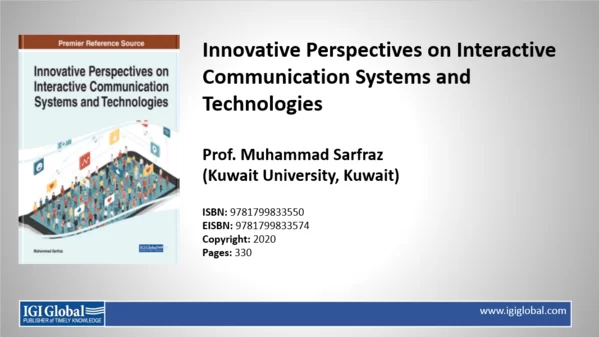
I am sharing excerpts from some of my works, including this one concerning hybrid communication and learning approaches. You can purchase relevant chapters by selecting the link “Access This Chapter” at the bottom. Book Excerpt, Chapter 11, Page 226 Today’s scholars discuss the importance of taking a hybrid approach to social communication. This hybrid effect combines the best of face-to-face and online choices. The approach also considers various influences on communications. My research in this area suggests an approach that combines the best of face-to-face and online communication. Also, some researchers suggest that even when online is the better method, it was more effective when combined with face-to-face interactions (M. A. Brown, 2017, p. 209). Everyone strives for the best possible message-medium fit tailored to the choice of media and type of use. This type of correct \”fit\” results in enhanced collaborations. Once you achieve that fit, you can focus on message, media-mix, task, online success, interaction partners, and other best practices (Bubaš, 2001). This work addresses the continued growth of the online space. This growth allows us to work toward a hybrid approach to combining face-to-face and online activities. The approach allows us to move to a discussion of the importance of trust in effective collaborations. We build trust, in part, by overcoming and adjusting to communication barriers. Building trust this way often leads to discussions about communication success and suggests the proposed hybrid approach. Access This Chapter!

Book Excerpt: Hybrid Communication and Learning Approaches Read More »

returning small

Book Excerpt: About Emotional Intelligence and empathy

This excerpt offers good information on emotional intelligence (EI) and empathy. You can purchase relevant chapters by selecting the link “Access This Chapter” at the bottom. Book Excerpt, Chapter 10, Page 204 The rise of EI and the continuing growth of online interactions work together to demonstrate the importance of participatory decision making as a motivational technique. However, participation in decisions requires that the leader act in a prosocial manner, focusing on outcomes that are beneficial to more than just the leader. A prosocial attitude leads to creation of buy-in through shared value and good management of emotions, requiring skill in both EI and empathetic approaches. EI is about connecting with one\’s own emotions and those of others to enable effective leadership communication. Empathy is the ability to understand someone else\’s emotions, feel them as if they were yours, and even to take some action in support or mitigation of those feelings. The lack of feedback or agreements on shared value in online interactions are highlighted when people are forced into face-to-face interactions and are subsequently unable to find these important communication tools. This chapter offers a new approach to leadership communication. Access This Chapter!

Book Excerpt: About Emotional Intelligence and empathy Read More »

social small

Book Excerpt: Social Communication Research

This work features some of my social communication research brought to publication thanks to IGI Global. You can purchase relevant chapters by selecting the link “Access This Chapter” at the bottom. Book Excerpt, Chapter 3, Page 47 This is an older work, but it is important to continue learning about and evaluating the use of digital communication. George Santayana said, “Those who cannot remember the past are condemned to repeat it.” That statement is the reason social communication is covered here with a historical view. This review of computer mediated communications (CMC) is helpful in understanding the nature of key developments. These led to the social media space we know today. Discussing the portable nature of various interactions is relevant as the foundation for a deep understanding of social communication. This is an important analysis in helping people understand the way we can use information technology to interact without the limitations of geographical distance and time. Access This Chapter!

Book Excerpt: Social Communication Research Read More »

0